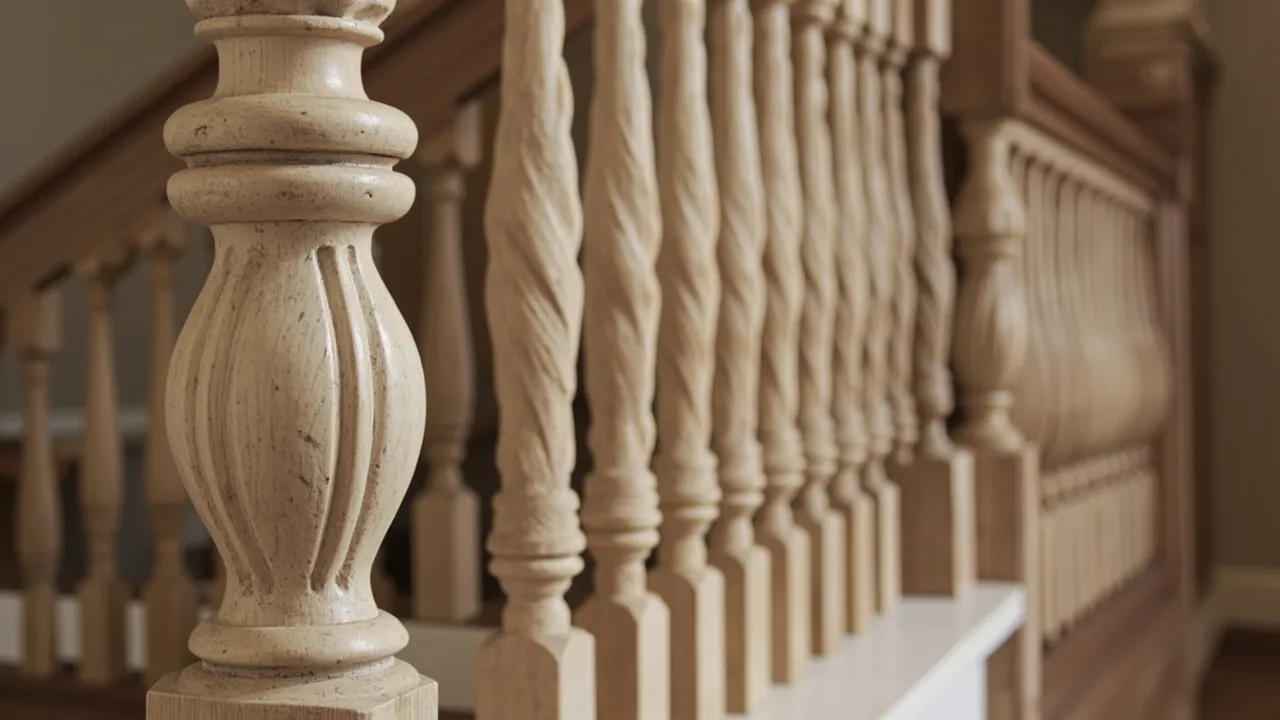
Barley twist vs fluted kitchen pilasters: which profile suits your cabinets?
Quick answer: barley twist vs fluted kitchen pilasters
Choosing between barley twist vs fluted kitchen pilasters comes down to era, height, and how loud the column should read in the room.
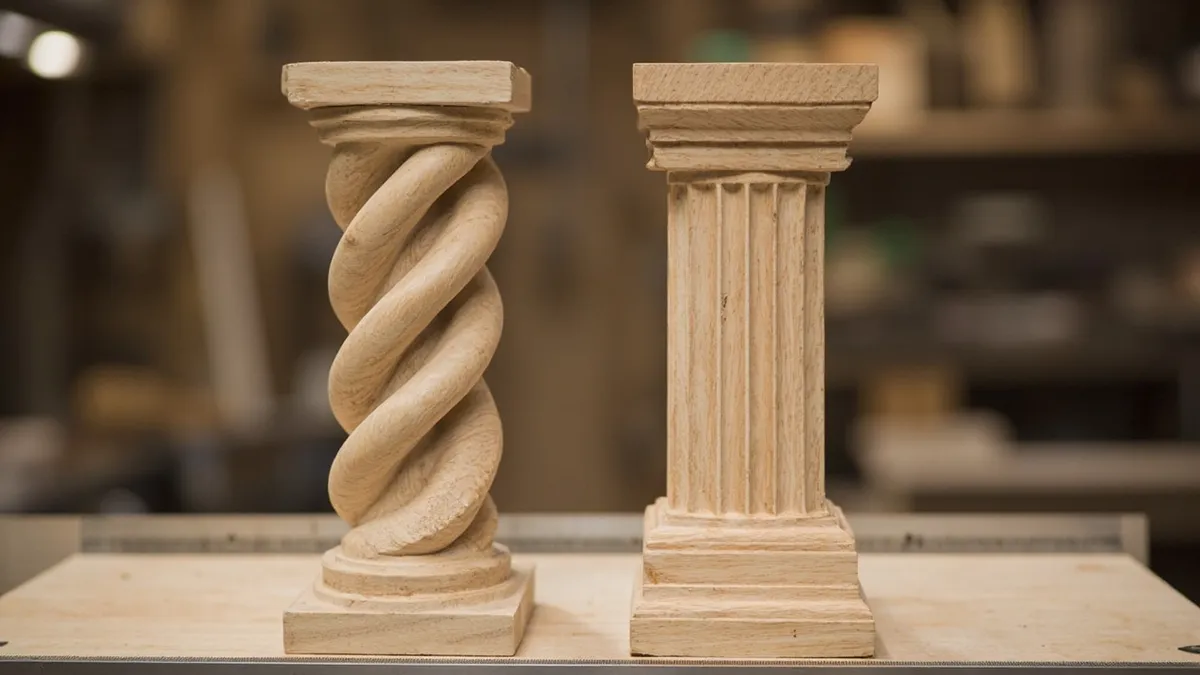
A barley twist is a chunky column with a tight, hand-cut spiral running up its full length, while a fluted pilaster is a straight shaft with clean, parallel vertical channels. Pick barley twist for a traditional or heritage kitchen where the column should be a feature, and pick fluted for a Shaker, Georgian, or minimalist run where the detailing should frame the room, not dominate it.
Quick comparison at a glance
- Barley twist pilaster: tight spiral, single or double helix, left- or right-hand; reads as hand-crafted and period.
- Fluted pilaster: straight vertical channels, uniform spacing; reads as architectural, calm, and ordered.
- Typical UK sizes: 70 mm or 90 mm square, 720 mm to 2200 mm tall, half or full column.
- Common timbers: oak, pine, walnut, sapele, tulipwood; oak and walnut sit at the top of the price band.
For period properties, a hand-turned barley twist from a single turner on a traditional lathe will out-class a machine-made copy. The slight variation in spiral pitch is what makes it read as authentic, and the same logic drives buyers of barley twist wood columns across the UK trade. For contemporary kitchens, the uniform channels of a fluted pilaster give the clean shadow line most designers want, and they are faster to produce at scale, which is why spindle furniture makers such as Spindles Woodturning, Simon Spencer's Denhams supply network, and Houzz-listed workshops list them alongside their turned components.
The three things that decide it
The era of the property, the height of the cabinet run, and whether the column should be a feature or a frame. A 1930s semi, a Victorian terrace, or an 18th Century-style heritage restoration usually asks for hand-turned barley twist with a variable spiral pitch, sourced from a wood pilaster manufacturer who can match original proportions. A new-build Shaker kitchen or a minimalist flat-front run usually asks for fluted pilasters in a square or rebated section, often produced as wood furniture components from the same batch of wooden furniture components as the matching cabinetry.
If you are weighing barley twist vs fluted kitchen pilasters for a specific cabinet run, send a photo and rough measurements to the workshop on the contact page, or call 01484 666 333, and we can turn the right profile in the right timber to your sizes.
Common questions about barley twist vs fluted kitchen pilasters
Why is it called barley twist?
The name comes from the tightly wound spiral that resembles a barley grain head or a twisted rope. A barley twist column is produced on a lathe by cutting a continuous helix into a square or cylindrical blank, leaving a bead that spirals from base to top. The shape appears on English furniture legs, bedposts, and stair newels from the 17th century onward, and it remains a signature profile for 18th Century style kitchen pilasters in heritage restorations today.
What is a fluted pilaster?
A fluted pilaster is a flat-backed column with shallow vertical grooves (flutes) carved or turned along its face. The flutes are usually semicircular channels spaced evenly across the width, giving a clean architectural shadow line. Fluted pilasters suit Shaker, Georgian, and contemporary kitchens where the work needs to read as quiet and ordered rather than ornamental, and they are often paired with a fluted deck spindle to carry the language from cabinet to landing.
How to date barley twist furniture?
Barley twist furniture is most often dated by the number of twists, the timber, and the turning style. English examples from the 17th and early 18th Century typically use walnut or oak with a single loose spiral. Victorian and Edwardian pieces (around 1840 to 1910) favour double or tightly packed twists in mahogany. Auction catalogues and reference books such as the Antique Collectors' Club Dictionary of Furniture list dated comparables, and a maker's mark or period construction detail (hand-cut dovetails, pegged joints) will confirm a date.
What are the two different types of pilasters?
The two broad categories are structural and decorative. Structural pilasters carry weight as load-bearing columns built into a wall or cabinet run. Decorative pilasters are applied to the face of cabinetry to imitate a column and add shadow and rhythm. Within the decorative group, turned profiles (barley twist, fluted, gun barrel, Victorian) are the most common kitchen options, and most UK woodturners will produce either a full or a half pilaster on a backing board to suit the installation. Many also share tooling with furniture spindles and wood furniture parts production, which keeps pricing consistent across a project.
When a standard profile will not do
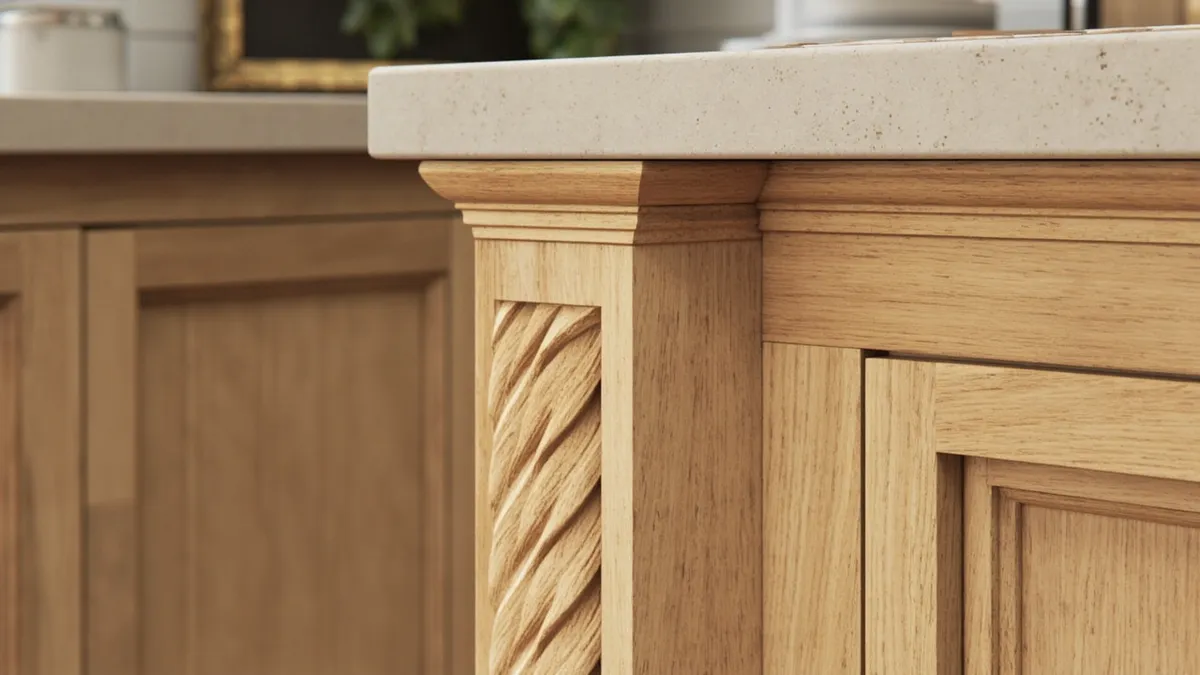
Stock barley twist and fluted kitchen pilasters cover most projects, but they fail when an opening is non-standard, a wall is out of square, or an existing piece needs to be matched. If your larder sits 75 mm wider than a common 90 mm stock, or if a 1930s original has beads you want to continue, a catalogue size will leave gaps or mismatched grain.
Hand turning on a traditional lathe lets the craftsman vary pitch across the length so the spiral reads as continuous rather than four identical lengths butted together. It also allows timber choice (oak, walnut, mahogany, sapele) to match existing cabinetry instead of whatever a CNC line is currently running. Browse the workshop's kitchen pilasters range to see the standard profiles, or read the hand-turned vs machine-made comparison for why the difference shows in the finished room.
Next steps: commissioning your pilasters
Send a photograph or sketch with dimensions and the timber you would like matched. Daniel Fitzpatrick reads every message at the Honley workshop and will tell you within a day or two what is realistic, what it costs, and how long it will take.
Call 01484 666 333 or email info@spindleswoodturning.com with a clear photo and a tape-measure dimension; a written quote usually follows within two working days. For ongoing trade supply, ask about a standing arrangement so replacement kitchen pilasters and stair parts can be turned as stock runs low. Have your measurements and one reference picture ready before you make contact, and you will have a firm price before the week is out.
Sources
- Hand-Turned Barley Twist Pilaster Set Against Machine-Made Copies | Spindles Woodturning Journal
- Twisted Column Profiles by David Reading
- Timber Pilasters for Kitchens | UK-Wide Despatch | Spindles Woodturning
- Kitchen Pilasters Turned by Dave Dalby
- Spincraft Pilaster Collection Alongside Newels and Spindles
- Dave Dalby Workshop: Table Legs, Bun Feet, Twisted Pilasters and Sundry Turnings
- A Guide to Turned and Pegged Newel Posts: Fluted, Twisted and Provincial Patterns
- Inspiration Gallery of Kitchen Pilaster Designs