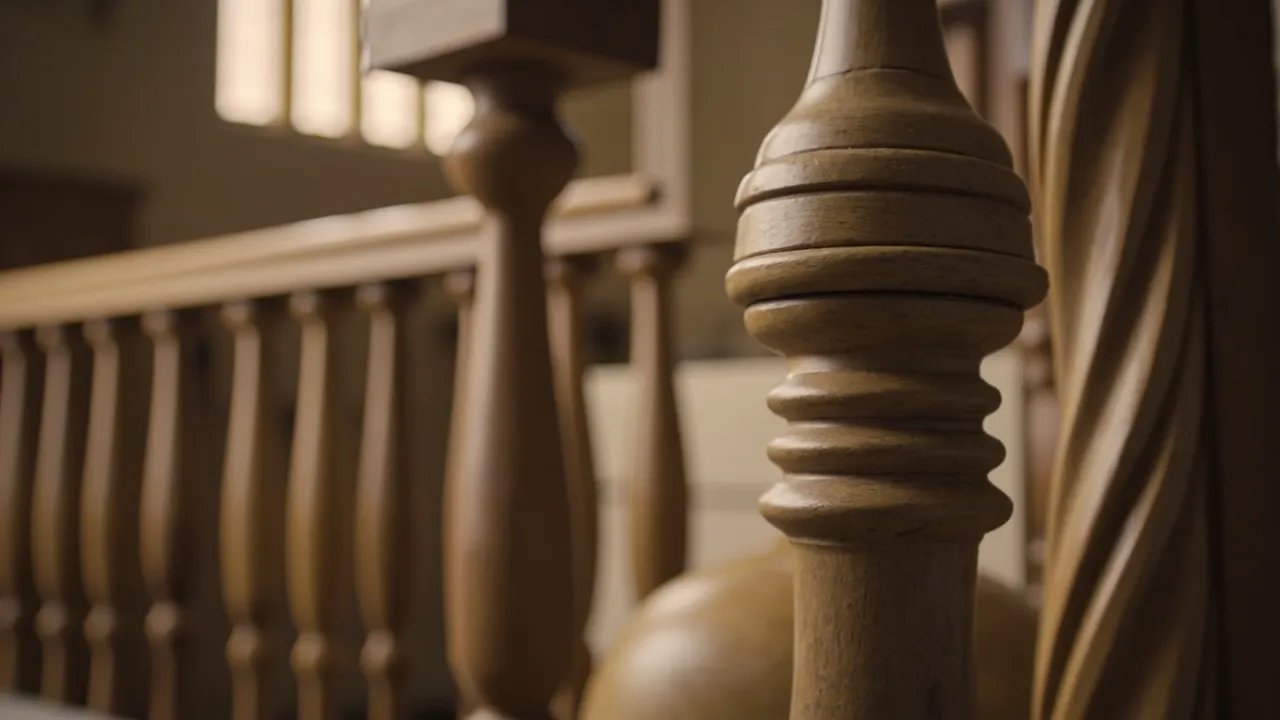
A gun barrel newel is a smooth, gently tapered cylinder; a barley twist newel is a spiralling helix with deep flutes. In a gun barrel vs barley twist newel post decision, the era of your property and the joinery you are matching usually settle the choice.
Gun barrel vs barley twist newel post: which is right for your staircase?
A gun barrel newel is a clean, gently tapered cylinder with no ornament along the shaft. A barley twist newel is a spiral column cut with deep, regular grooves that run from base to neck, mimicking the silhouette of a barley-sugar sweet. Both are hand-turned on a traditional lathe from solid timber, so the real choice is period and shadow line rather than construction.
The deciding factor is almost always the era of the property and the existing joinery you are trying to match. Pick barley twist for Jacobean and Victorian interiors, and gun barrel for Georgian, colonial, or modern schemes that need a quieter profile.
What does a barley twist post look like?
A barley twist post carries deep, twisting flutes that spiral up the shaft from base to neck, producing a rope-like silhouette. The turning is symmetrical, so the spirals read identically from every angle on the staircase.
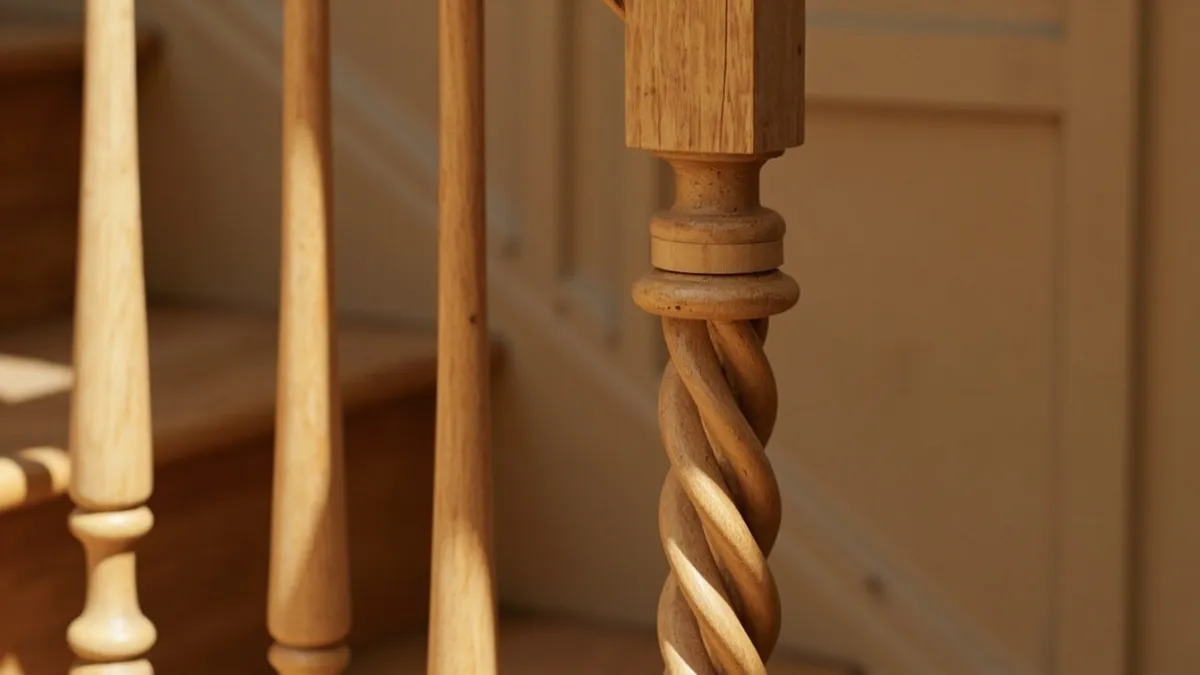
This shape is dense with shadow lines, which is why it sits naturally in panelled hallways and heavier timber surrounds. It also catches light well in an open well, where the twist reveals itself as you walk past.
What does a gun barrel post look like?
A gun barrel post is a plain, smooth-sided taper that widens towards the top, resembling the profile of an 18th-century musket barrel. There are no flutes, beads, or spirals, just clean lathe work and a soft shoulder where the cap sits.
The simplicity makes it forgiving on smaller staircases and tighter landings, where a busy barley twist would feel heavy. It also takes a decorative cap such as a ball, mushroom, or acorn without competing for attention.
Which one should you choose?
Match the post to the era of the house first, and to the existing balusters second. If the original spindles are barley sugar, replace with barley twist. If the originals are plain tapers or you are working on a Georgian or later scheme, gun barrel is the safer read.
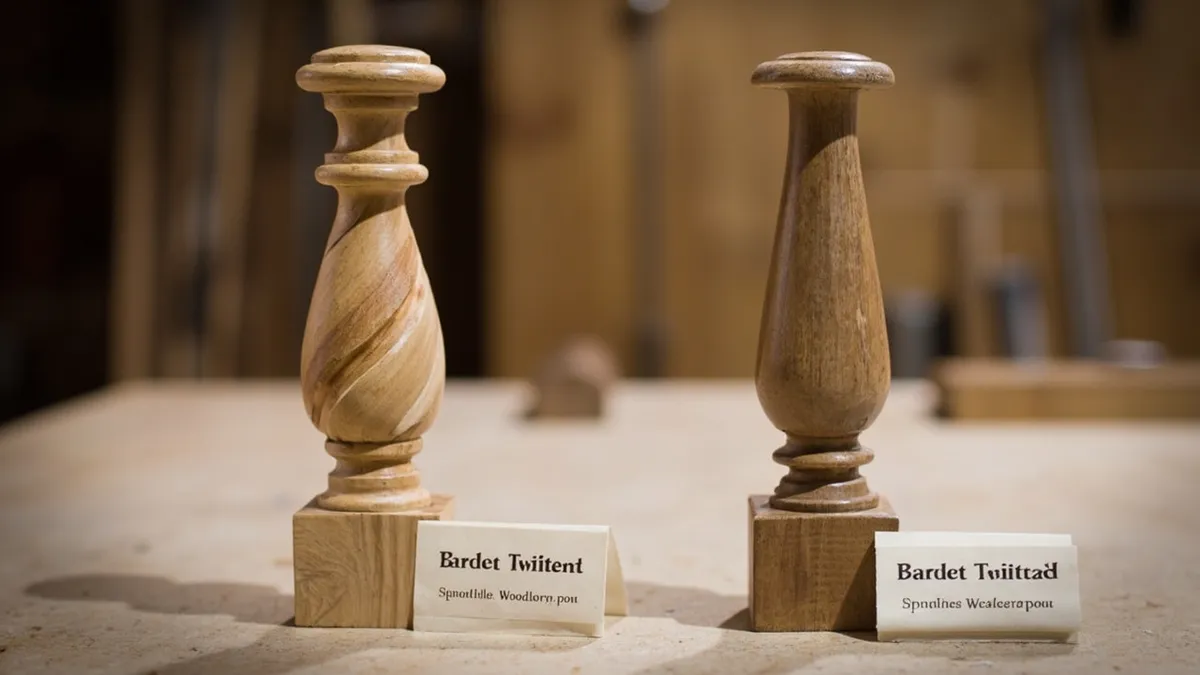
Send Daniel a photo of the existing staircase and the dimensions of the current posts, and the workshop will turn a sample for approval before final production. Give the workshop a ring on 01484 666 333 or drop a line to info@spindleswoodturning.com to begin a matching commission.
Key Questions Buyers Ask About Newel Posts
Are newel posts load bearing?
Yes, newel posts are load bearing. They anchor the handrail and balustrade and take the load of anyone leaning on the rail, so the post itself must be solid. In most traditional British staircases the newel is one continuous piece of solid timber, often 90mm or 120mm square, with grain running floor to ceiling.
Why is it called barley twist?
It is called barley twist because the profile mirrors barley sugar sweets, which are twisted into a spiral before they set. The name stuck once cabinetmakers and turners adopted the same helix for chair and bedposts in the 17th century, then carried it over into staircase joinery.
Are newel posts solid wood?
Yes, traditional British newels are solid wood, typically a single length of oak, pine, or ash rather than a glue-up. Turned posts such as barley twist and gun barrel are produced from one blank on the lathe, which leaves a natural tenon at each end that fits into the newel base and the cap.
What is a pegged newel post?
A pegged newel post is one where a turned stub, usually around 50mm, on the base of the upper post slots into a matching socket in the lower post or newel base. This spigot locks the two together and leaves no visible fixings, which is why it is the standard join for hand-turned barley twist and gun barrel newels.
Choosing, Matching, and Sizing the Right Newel Turning
Timber, dimensions, and staircase compatibility
Spindles Woodturning turns newel posts in two standard widths, 90mm and 120mm, with matching spindles cut to 900mm or 1100mm. Oak gives weight and a close grain that suits Victorian and Edwardian restorations. Ash offers a paler, even tone for painted schemes. Pine and hemlock work for budget runs or softwood staircases common in Yorkshire terraces.
For a heritage staircase in a Georgian townhouse or Jacobean cottage, barley twist in oak reads as period-correct. Gun barrel suits simpler colonial or Arts and Crafts interiors, and pairs well with chamfered oak handrails. Trade suppliers including Stairplan Ltd, Tradestairs.com, and the Cheshire Mouldings Benchmark range carried by Pear Stairs stock their own versions, useful as reference points when matching a period detail. In practice the timber, twist rate, and section size on those ranges rarely line up exactly with what is already fitted in an older house, so a sample turn is usually the safest way to confirm a match.
Coordinating with caps, handrails, and balusters
Match the cap profile to the shaft. A gun barrel or Victorian cap sits naturally on a barley twist post, breaking the spiral at the head. Mushroom newel caps and ball newel caps both work; mushroom reads softer, ball reads more formal.
Keep timber and turning style consistent down the flight. If the newels are barley twist oak, run barley twist spindles along a continuous handrail for a unified look. Half newel turnings and volute newel turnings at the landing and foot need the same timber and profile to avoid a patchwork result.
Next Step: Commission a Hand-Turned Newel Post
When a bespoke newel post is the right route
Off-the-shelf barley twist and gun barrel newel posts from ranges like Cheshire Mouldings Benchmark cover most straightforward replacements. The workshop at Spindles Woodturning in Honley steps in where standard sizes, timber species, or period profiles do not match what is already in the staircase. A 90mm post in American white oak, a 120mm gun barrel newel to suit a wider Georgian string, or a set of barley twist spindles in ash to match a stripped pine stair all fall outside the standard catalogue. Trade catalogues from Stairplan Ltd and Tradestairs.com are worth measuring against, but their standard twist rates and spindle lengths seldom match the slightly fatter, more loosely turned originals found in Victorian and Edwardian houses.
Daniel Fitzpatrick has been hand-turning stair parts at the Honley workshop since 1995, working to photographs, drawings, or sample pieces sent in by post. The process starts with a sample spindle or newel turned for the customer to approve, which protects both sides before a full run goes on the lathe. Kiln-dried oak, ash, pine, and hemlock are kept in stock, so lead times stay short for UK-wide delivery.
How to get a quote from the Honley workshop
Send a photograph of the existing post or spindle alongside a tape-measure shot of its width and length, plus a note on the timber. Customers also post small sample offcuts when they can. Daniel reads measurements off a 30 cm rule and turns a working sample from that brief, usually within a few working days, before any full set is committed.
Quotations for single replacement newel posts and full matched staircase sets both start the same way. Telephone the workshop on 01484 666 333 or write to info@spindleswoodturning.com with your pictures and dimensions, and the bench will come back with a quotation and a sample schedule.
Sources
- Shop - Spindles Wood Turning
- Bespoke Barley Twist Newel Post Made to Match Existing Staircase | Spindles Woodturning
- Choosing Barley Twist Newel Posts | Woods & Designs
- 90mm Barley Twist Newel Post with Spigot Dowel
- BT-8660 50" Barley Rope Twist Grande Newel Post
- Newel Posts
- 6 Stunning Newel Post Ideas For Your Home
- Quality Wood Staircase Newel Posts - JMP Wood