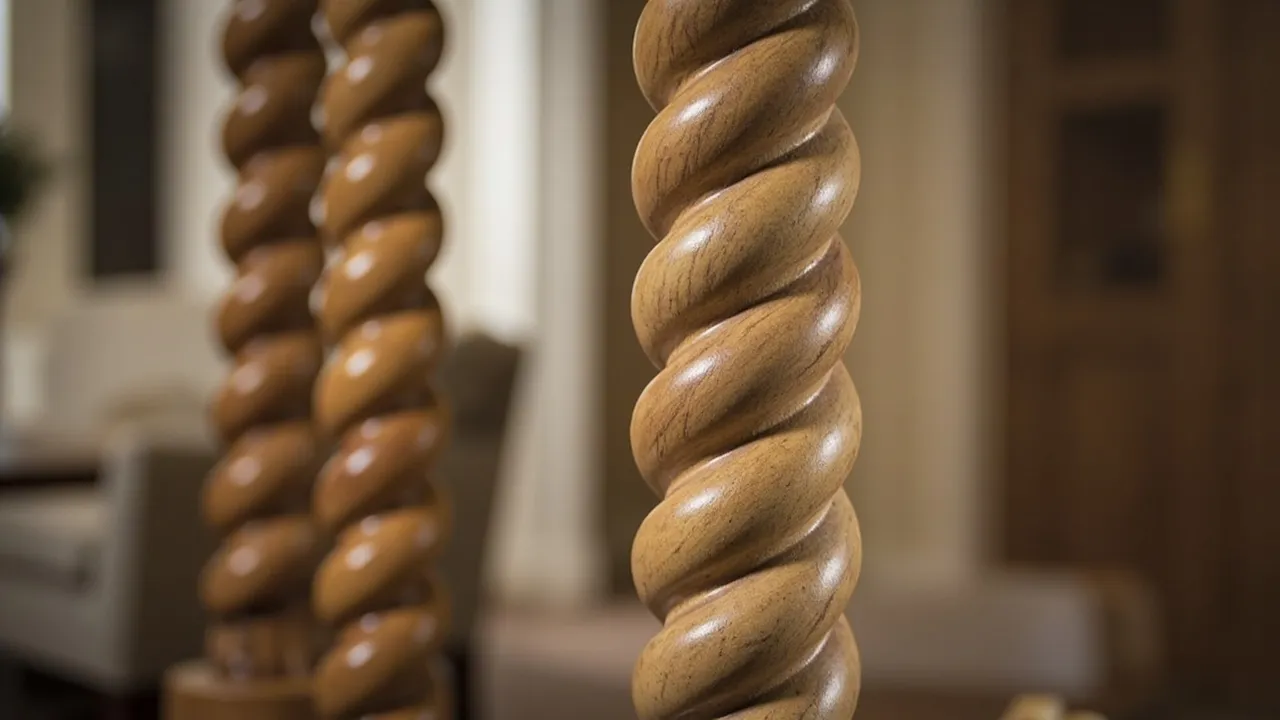
Quick answer: hand turned barley twist kitchen pilaster vs machine made
A hand turned barley twist kitchen pilaster vs machine made comes down to rhythm and joinery. A hand cut spiral shows small wobbles in pitch and bead depth, while a machine made version reads as a perfect repeat from top to bottom, every spiral identical.
Both methods give you a solid timber pilaster. The hand cut one carries marks that say a single maker turned it. Those marks matter when you are matching a period kitchen, a 1930s semi, or a run of antique cabinets where perfectly matched spirals would look wrong. Machine made barley twist pilasters fit modern kitchens and large refits where repeat sizing and speed come first. Hand turned pilasters fit restoration work, bespoke islands, and any design where the twist has to read as a crafted detail rather than a moulding.
The trade off is straightforward. Machine work is quicker and cheaper per piece. Hand work is slower, £150 to £600+ per bespoke pilaster in the UK, and lets you pick the timber, the section size, and which way the spiral runs. A kiln dried blank in oak, walnut, cherry, sapele, mahogany, beech, maple, tulipwood, pine, or ash can be turned to your measurements in a left hand or right hand twist, ready to sit alongside existing staircase spindles wood or replace a broken newel detail.
Before you commission either route, check three things: the underside and apron joinery (mortise and tenon is what to ask for), the rhythm of the spiral under raking light, and the timber's moisture spec. A solid, well joined blank outlasts a thin spiral every time.
How to tell hand turned from machine made, and what it costs in the UK
Spotting the differences in twist rhythm, surface and joinery
A hand turned barley twist has an uneven pitch. The spirals breathe in and out, and the beads where the helix meets the column vary by a millimetre or two as you run a finger down the length. A machine cut version reads as perfectly uniform, identical spacing, identical bead profiles, no give anywhere. Run a thumbnail along the flute: a turned piece catches on tiny chisel marks; a machine piece feels glassy and dead consistent.
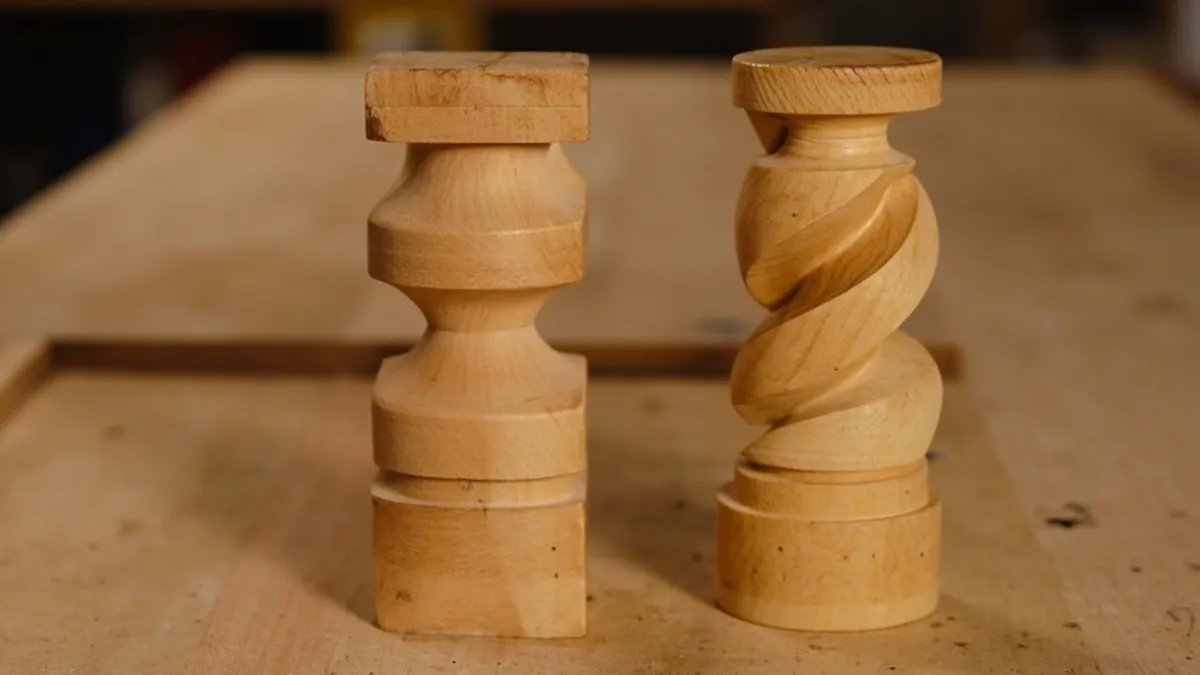
The underside tells the same story. Look where the pilaster meets its base block or apron. Hand work leaves a faint witness line from where the skew chisel finished the cut; machine reproduction arrives clean and bilaterally symmetrical. Joinery matters more than what the spiral looks like. A solid barley twist kitchen pilaster should be turned from one blank with a proper mortise into the base, not glued from two halves. Hollow or split blanks save timber and telegraph themselves as a dull knock when you tap them.
Barley twist origins, custom sizing, lead times and price band
The barley twist is a 17th century English turning, originally cut on a pole lathe with a scribed guide for the spiralling cut. By the late Victorian period, modified lathes and moulding machines could reproduce the form quickly, which is why many surviving "antiques" are in fact machine made. Genuine pre 1850 hand turned examples are rarer and usually show sharper, more confident irregularities.
For a bespoke kitchen pilaster in oak, pine, walnut, maple, cherry, sapele, tulipwood, beech, mahogany or ash, Spindles Woodturning works to your height, width, twist direction and pitch length. Typical UK price for a single hand turned barley twist kitchen pilaster sits between £150 and £600, depending on timber and section size. Lead time runs 2 to 4 weeks from sketch or photograph approval, with UK wide delivery included. The same kiln dried stocks feed the stair spindles and stairs spindles wood ranges, so grain tone can be matched across an island flank and an adjoining staircase. See the full range on the kitchen pilasters page.
Send dimensions, a photo of the existing kitchen, or a sketch to start a quote.
Next step: speak directly to the maker about your pilaster
When to use the kitchen pilaster service
Choose a hand turned barley twist kitchen pilaster when you need a piece that matches existing period joinery, fits a non standard opening, or has to arrive in a timber your local merchant does not stock. The Honley workshop keeps kiln dried blanks in pine, oak, maple, walnut, cherry, sapele, tulipwood, beech, mahogany and ash.
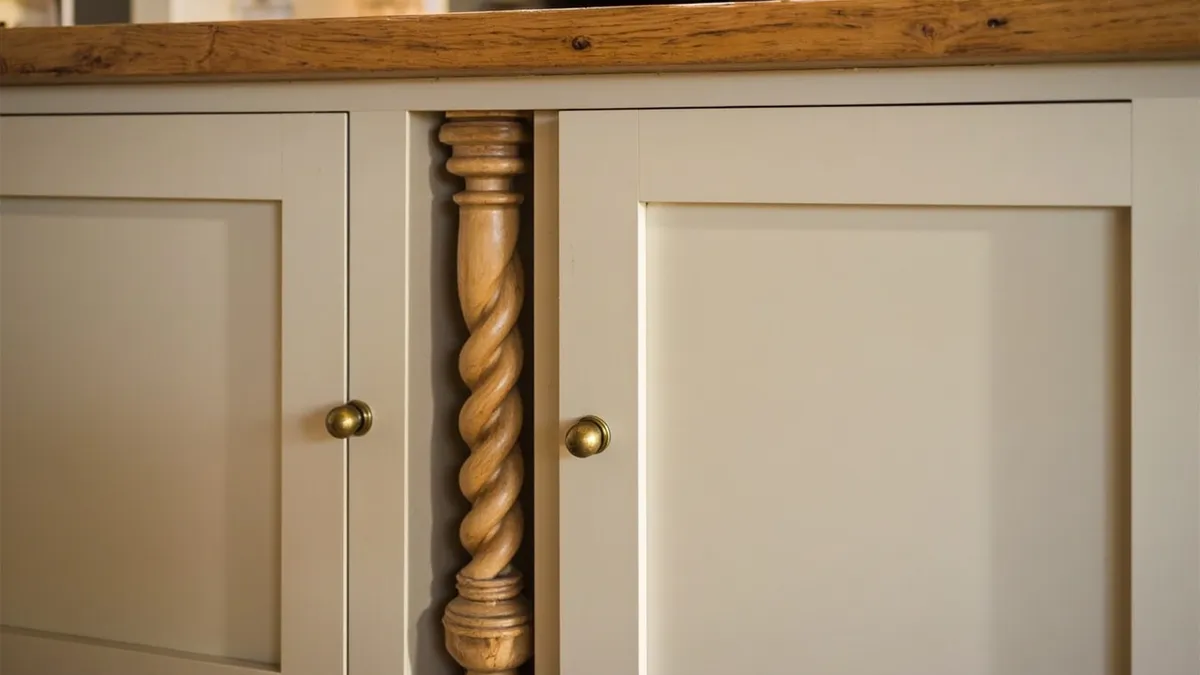
Reach for a pilaster when a kitchen run looks flat: a larder flank, an island end, a range surround. Barley twist, fluted, gun barrel and Victorian profiles all work. The twist reads well in tall, straight runs; a gun barrel suits a narrower drawer end.
Pick the maker, not a catalogue, when the cabinetry is bespoke, the ceiling is 2.4 metres and standard 900 mm stock looks short, or when a joiner has already cut the housings to a precise dimension. One phone call saves a re order.
How to get a tailored quote from Spindles Woodturning
Send three details: the profile, the finished length and width, and the timber. A photograph of the kitchen elevation or the existing pilaster helps Daniel Fitzpatrick match pitch and rhythm to work already in the room. Sketches are welcome; a rubbed down section from a broken original is better still, and has settled matching jobs where a single photo left too much guesswork. If the pilaster is sitting next to existing spindles for staircase work, the same photo doubles as a timber reference.
Quotes come back with a lead time, usually two to four weeks for a single pilaster, longer for matched pairs or full kitchen runs. Delivery runs across the UK. For a worked example of island pricing, see the barley twist pilaster cost guide.
Phone 01484 666 333 or email info@spindleswoodturning.com, or use the contact page.
Sources
- Dating a Barley Twist Piece, Chef's Resource Reference
- The 2026 Buyer's Guide to Barley Twist Tables
- Notes on Barley Twists, David Reading
- Dating Barley Twist Furniture, Home Essentials Guide
- Kitchen Pilasters, Spindles Woodturning
- Pricing a Bespoke Barley Twist Pilaster for Your Kitchen Island
- Barley Twist Furniture, Tables, Desks and Mirrors, Wisteria
- Making barley twist clock decoration, NAWCC Forums