
Quick answer: how to match replacement spindles to existing staircase
The short version
Pull one intact original spindle out and use it as a physical sample to match replacement spindles to an existing staircase.
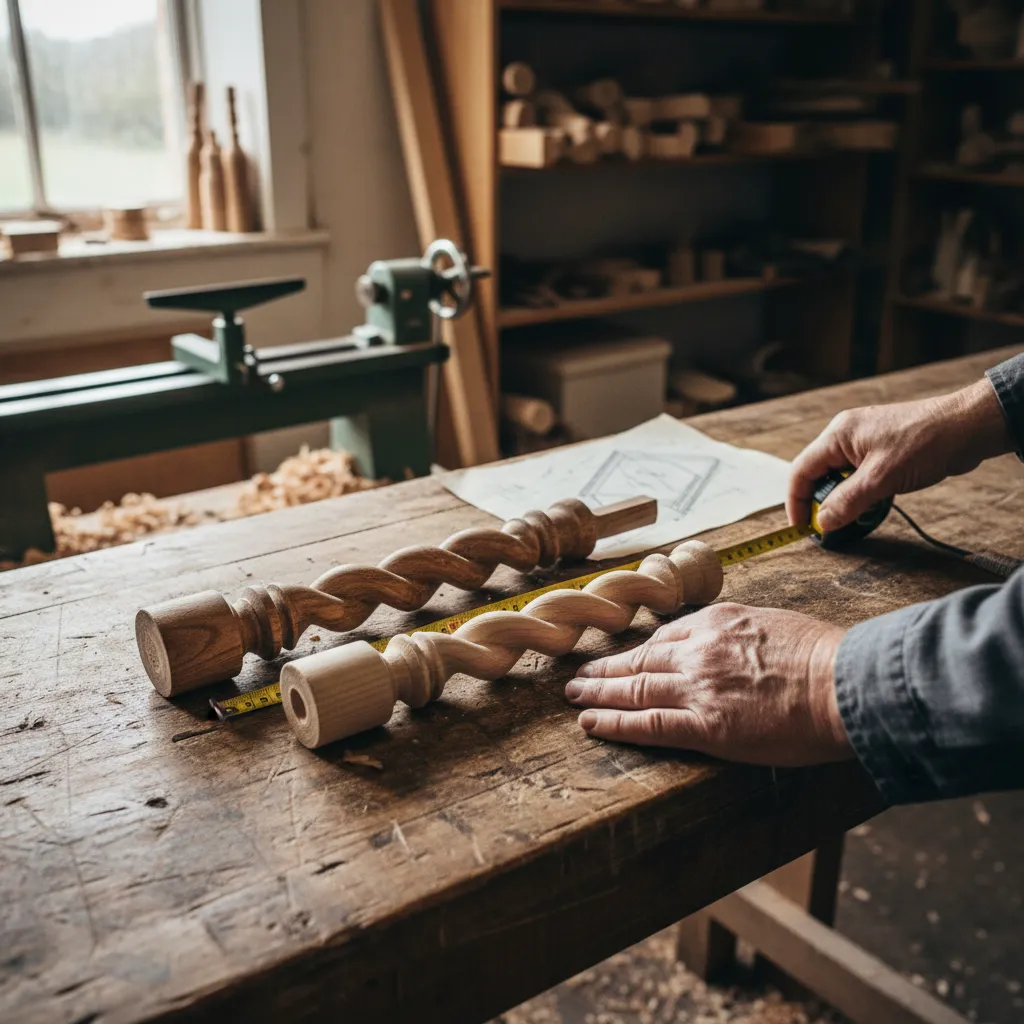
Measure its length and the gap from tread to handrail, then send it to a turner who can copy the profile, taper, and timber. Material, diameter, and finish all need to line up, and reusing the original holes keeps the spacing honest.
Can you just replace spindles on a staircase?
Yes. You can swap spindles without taking the handrail down, as long as you leave one or two in place at a time so the rail stays supported. Number each spindle with painter's tape as it comes out so it goes back into the same gap, then clear the old holes in the treads and handrail before dry-fitting the new pieces. If the holes are too tight, a sharp spade bit will open them up. Epoxy is best avoided in the tread sockets.
How to modernise stair spindles?
To modernise stair spindles, swap every spindle for a single new profile and paint the newel posts, handrail, and treads in one matching colour so the change reads as a deliberate choice. Top Hat Black in a urethane trim enamel is a common pick for a crisp monochrome look. A coat of gel shellac over raw timber helps new balusters blend if you keep any originals on the flight.
How to choose the right stair spindles?
Match four things in this order: timber species, cross-section and taper, decorative pattern, and finished length. UK Building Regulations require a 100 mm sphere to be unable to pass between balusters, so any replacement has to hold that spacing on your staircase. When the original pattern is out of production, a turner can copy it from a sample or a clear photograph.
What are the rules for stair spindles?
The main UK rule is that a 100 mm sphere must not pass between spindles, which sets the maximum gap at roughly 99 mm. Spindles also need to sit firmly in the tread and handrail. Any newel post replacement should carry the same cap profile as the original so the joints stay consistent at the top and bottom of the flight.
A practical next step
Remove one intact spindle, label it with the staircase location and the gap measurement from tread to handrail, and post it to Spindles Woodturning in Honley with a couple of clear photos. Daniel Fitzpatrick will quote a copying price based on the timber, profile, and quantity, usually returned within a few working days.
Matching stair parts to an existing staircase
Copying baluster shape, width, and turned detail
The most reliable shortcut is to set aside one intact original spindle and treat it as the master copy. Daniel Fitzpatrick has turned matching spindles from a single survivor for customers whose originals were chewed by dogs, lost during renovations, or worn past saving. Photograph the profile from two angles, then measure the thickest waist, the taper, and the depth of every bead and ring.
Number each old baluster with painter's tape as you remove it, so the spacing pattern across the staircase is preserved. When the originals are unusable, measure from the top of the tread to the underside of the handrail and add roughly 25 mm for a dry fit. Wrought iron balusters are cut with a hacksaw, with a towel wrapped around the bar to protect the finish; wood ones with a fine-tooth hand saw.
Matching newel posts, handrails, and treads
If the newel post shares the same turned pattern as the spindles, leave it alone and copy the balusters to it. If the post is a later replacement in a different style, the new spindles will never quite sit right, so it is worth turning a matching newel post at the same time. The same rule applies to the handrail: a slender modern rail beside a heavy Victorian spindle profile will read as a mismatch no matter how clean the turning is.
For treads and risers, take a short offcut from the underside of a tread so the wood type, grain density, and any existing stain can be matched. Send clear photos of the full flight, the newel cap, and a close-up of the spindle detail to the maker before any work begins.
Identifying spindle material and finish
Match the timber species where you can: kiln-dried European oak for oak, American white oak for white oak, because stain will not hide a mismatched grain. Mahogany, pine, and beech each carry their own ring pattern and weight, and a quick sand on an unseen face will tell a turner which species he is looking at. If the original spindles carry a tinted varnish or wax, note the sheen level (satin, gloss, or matt) so the new pieces can be finished to match rather than standing out as a brighter line on the flight.
Taking precise measurements for spindles and newel posts
Measure each gap from tread nosing to the underside of the handrail at three points across the flight: bottom, middle, and top. Older staircases often drop a few millimetres from one end to the other, so a single measurement can leave you with spindles that bottom out or sit loose in the rail. Square or chamfered newel cap dimensions matter too: the cap must seat on the post shoulder, not the tenon, or the cover joint opens up within a season.
Common questions about matching replacement spindles to existing staircase
Can you just replace spindles on a staircase?
Yes. Spindles can be swapped one at a time without removing the handrail, as long as you leave one or two in place while you work so the rail stays supported. The job is well within reach of a competent DIYer with a handsaw, spade bit, and chisel.
How to modernise stair spindles?
Clean black paint on slim square balusters is the quickest route to a modern look, and it lets you unify mismatched timbers in a single afternoon. If the staircase is Edwardian or Victorian, weigh swapping wrought iron for wood before painting, since heavier iron changes the visual weight of the whole flight.
How to choose the right stair spindles?
Start from one intact original spindle and copy its length, taper, and profile rather than working from a photograph. Match the timber species where you can, kiln-dried European oak for oak and American white oak for white oak, because stain will not hide a mismatched grain.
What are the rules for stair spindles?
UK Building Regulations Part K require a 100 mm sphere to be unable to pass between balusters, which in practice means no more than a 99 mm gap. Handrail height must sit between 900 mm and 1000 mm above the tread nosing, and stair flights narrower than 1 m wide can use the lower figure.
Send a sample or photo and get a quoted match
What Daniel needs from you to copy your spindles
Send at least one original spindle if you can, packed in a small box with newspaper or bubble wrap. If a broken piece is all you have, keep every fragment, including the chewed, cracked, or snapped section, because the profile and taper are read from the shank, not the ends.
A clear photograph also works when no original survives. Take one shot straight-on against a plain wall with a ruler or coin beside the spindle for scale, then a second shot showing the top and bottom tenon detail. Note the timber species if you know it (oak, pine, mahogany), the finished colour, and the rough length from tread to handrail. For full staircase matching, photograph the newel posts, handrail profile, and any existing balusters on the same flight so the copy sits within the original scheme.
Ordering, turnaround, and what happens next
Once your sample or photos arrive at the Honley workshop, Daniel turns a test spindle on the lathe and emails a quote for the full set within a few working days. Most orders of standard Barley Twist, Fluted, Gun Barrel, or Victorian profiles are dispatched across the UK in two to three weeks. One-off copies or large matching runs take longer, and Daniel confirms a date before you commit.
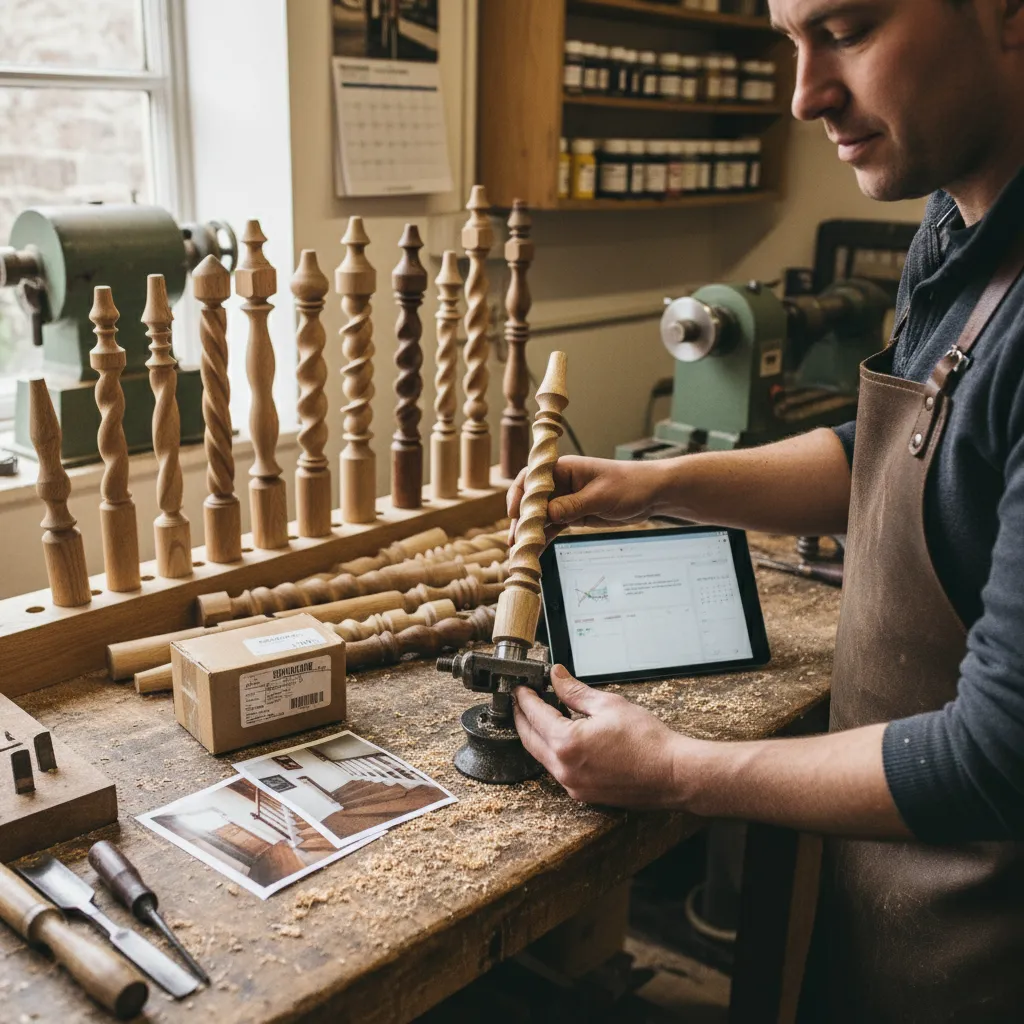
Before ordering, decide whether to replace every spindle on the flight or just the damaged ones, because colour drift between old and new timber is harder to hide on a part-refresh. Posting a single spindle today is the fastest route to a quoted match.
Sources
- A guide to reproducing period baluster profiles | Ask This Old House tutorial
- Swapping out stair balusters the DIY way | Bless'er House
- Finding a replacement spindle that blends in | r/HomeImprovement thread
- A clever fix when stair balusters go missing | Facebook group post
- Ideas for swapping out worn staircase spindles | Pinterest pin
- Fitting handrail and new balusters from scratch | staircase walkthrough
- Updating stair railings by refreshing the balusters alone | Chris Loves Julia
- Giving an old staircase a fresh feel with metal balusters | DIY video