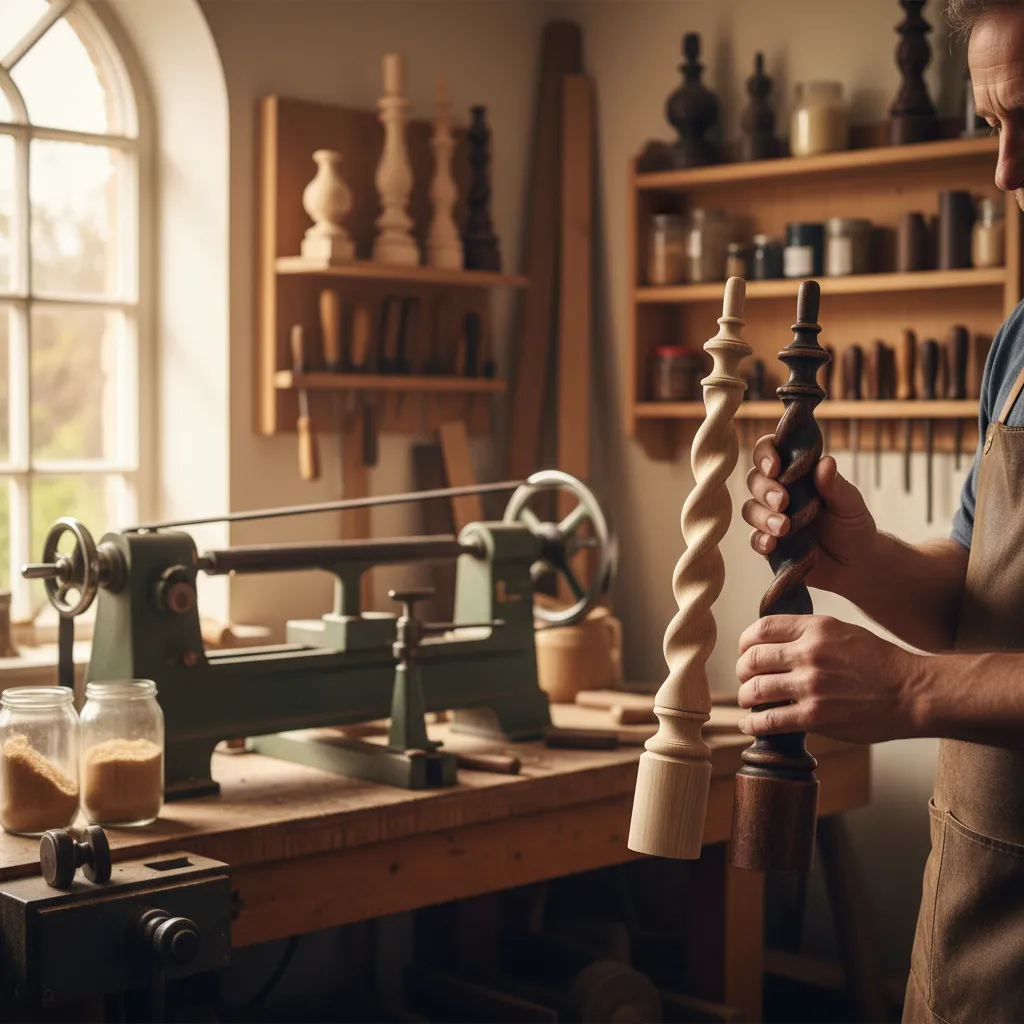
Quick answer: how to match replacement stair spindles to existing woodwork
The short version
To match replacement stair spindles to existing woodwork, measure one intact spindle end to end (including both dowels), photograph it beside a tape measure, identify the wood species and turned profile, then commission a turner to copy that exact pattern.
Off-the-shelf stock only works when the original spindles were a standard, still-produced design.
How to match spindles?
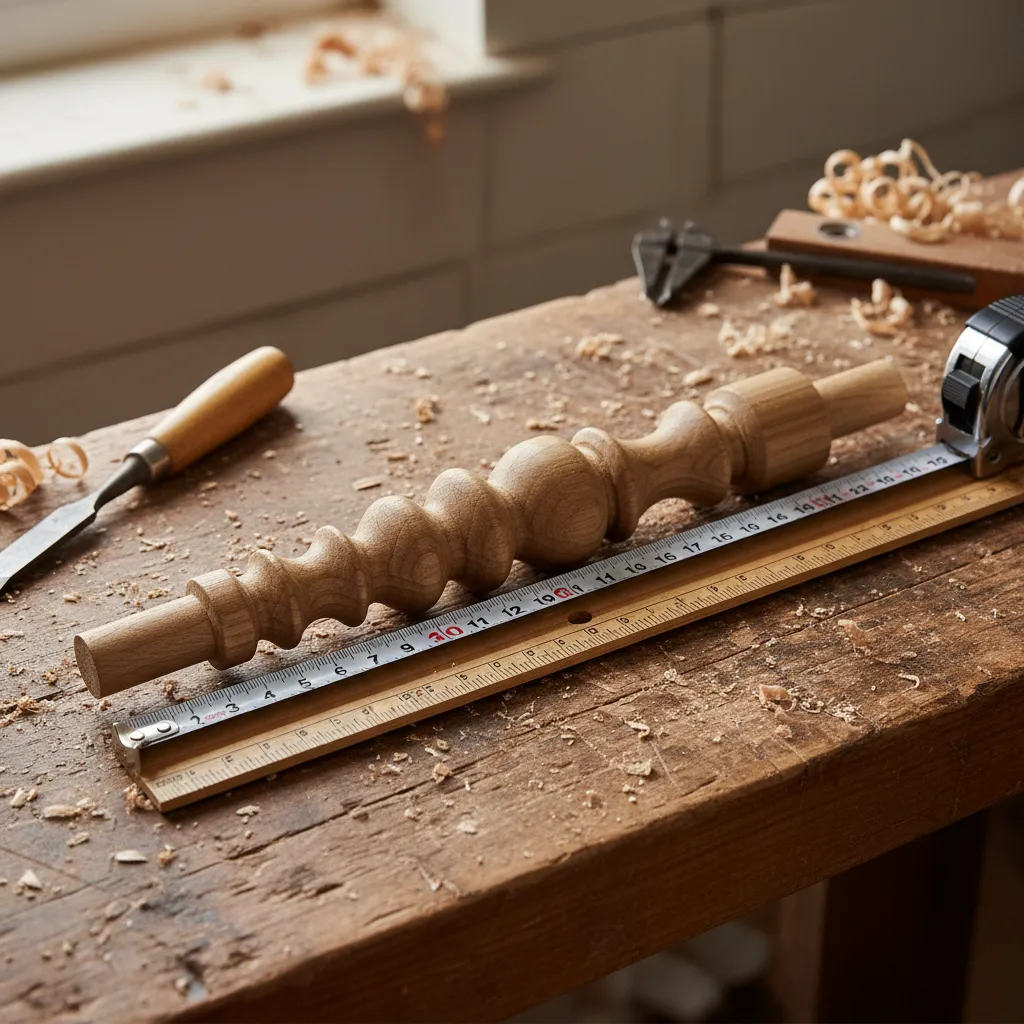
Begin with a single sound example: ease one baluster out of an out-of-the-way spot, note its full length, the diameter of the dowels at each end, and the shaped or squared portion in between. Lay it flat on a ruler in natural daylight and snap a photo, then forward both the measurements and the pictures to a turner who works from samples. Getting the carved contour to align, rather than only the numbers on a tape, is what allows the new pieces to settle in unnoticed.
How to modernise stair spindles?
To bring stair spindles up to date, exchange the present balusters for something plainer (crisp square, slimmer colonials, or slender black iron) while leaving the original newel posts and handrail in place to retain warmth. The contrast reads as a thoughtful choice, and you sidestep stripping joinery that often carries structural load into the stringer.
Can you just replace spindles on a staircase?
Yes, individual stair spindles can be swapped without disturbing the handrail or newel posts, as long as the new balusters share the same dowel size and seat properly in the existing sockets of the shoe rail and the underside of the handrail. Ease off the fillet strips, lift the old spindle clear, try the new one in place, and fix it home. Building Regulations still keep the gap between spindles to a maximum of 100mm.
What can I use instead of stair spindles?
Should matching timber prove out of reach, options include wrought-iron balusters, toughened glass panels fitted between newel posts, or a solid panelled balustrade. Each choice shifts how the load travels through the stair, so the stringer and post fixings are worth a careful look before settling on one.
Practical next step
Take one spindle out, measure it twice, and post clear photographs with a ruler in shot to a turner for a like-for-like quotation. For hand-turned copies in kiln-dried timber, ring 01484 666 333 or use the contact page with your measurements attached.
Common questions about how to match replacement stair spindles to existing woodwork
How to match spindles?
Measure an existing spindle from one end to the other, record the dowel diameters at top and bottom, and lay it flat against a tape measure for a clear photograph before passing the details on to a turner. Profiles, taper, and beadwork all differ across Victorian, Edwardian, and Colonial staircases, so naming the era is a help. For pre-1950s pieces shaped on local knife lathes, off-the-shelf spindles seldom line up, and a hand copy from one good sample is the steadiest path.
How to modernise stair spindles?
Swap the balusters and keep the handrail, newel posts, and shoe rail untouched for the quickest refresh. Cleaner square or twist shapes feel more current than busy Victorian beads, and a coat of matt black on the spindles shifts the look without disturbing the timber around them. Match the new spindles with a sympathetic newel cap so the joinery still feels considered.
Can you just replace spindles on a staircase?
Yes, individual balusters can be exchanged without lifting the handrail, as long as the dowel size lines up with the sockets already drilled in the rail and shoe rail. Saw through the old spindle at its centre with a fine-tooth blade, prise the two halves free, and trim fresh pieces to length for any rake. Building Regulations still cap the space between spindles at 100mm, so count the new set out before fixing them home.
What can I use instead of stair spindles?
Toughened glass panels, stainless steel balusters, or a frameless mesh infill all stand in for wooden spindles when the original timber simply cannot be matched. Each calls for its own fixings into the handrail and stringer, and moving from iron to wood usually means altering the newel posts too. Glass keeps the light flowing, steel suits a sterner brief, and mesh suits a modern country finish.
Post a measured sample, a sharp photograph with a ruler in shot, and the species or finish you need to info@spindleswoodturning.com or call 01484 666 333 for a matching quotation.
Next Steps: Send Your Spindle Sample to a Hand-Turner
What to send and what to expect back
Take one sound spindle out of the staircase and post it to the workshop, well wrapped in bubble wrap inside a small cardboard tube or a stiff box. Photograph the spindle alongside a tape measure before you lift it out, and leave the rest of the balusters in place so the turner can read the gap pattern. Daniel Fitzpatrick at Spindles Woodturning can then trace the profile on a traditional lathe and turn each replacement to the same length, dowel diameter, and taper as your existing woodwork.
You should expect a brief exchange of notes on timber choice and finish. Poplar, oak, and beech are familiar matches for British period homes, though a kiln-dried hardwood usually gives a closer grain to older balusters; softwood matches can work on later homes where the originals were factory-moulded rather than hand turned. Lead time is typically two to three weeks for a small batch, longer if the design carries barley twist or rope fluting that needs patient hand work.
Trade-offs, costs and how to commission the work
Custom spindle copying costs more per piece than a catalogue set, but it spares you re-routing the shoe rail, the fillet strips, or the handrail when a stock profile refuses to sit right. Trade customers and developers often batch orders by sending a labelled set of old spindles, which keeps the unit price sensible. Single-spindle replacements for heritage jobs carry a higher price because the turner is setting up the lathe for one-off work.
To commission the work, post your sample along with a short note covering stair span, wood species, and whether the spindles are square-top or pin-top to info@spindleswoodturning.com, or call 01484 666 333 during workshop hours in Honley. A written quote usually follows within a few working days. Post a sample by courier using the details on the contact page.
Sources
- How to Change the Spindles on a Staircase (Without Rebuilding) | Arnold Wood Turning
- STAIR SPINDLES & NEWEL POSTS COPIED TO MATCH
- How to Replace Stair Spindles - DIY Stair Makeover - Bless'er House
- Custom Wood Balusters & Spindles | Arnold Wood Turning
- How To Coordinate Wood Balusters with Existing Home Décor | Arnold Wood Turning
- Set of 8 Antique Wood Staircase Spindles, 8 Matching Stair Balusters - Peoria Architectural Salvage
- USA Made & Amish Craftsman Designed Newel Posts & Baluster Spindles - StepUP Stair Parts
- How to Replicate Antique Staircase Balusters