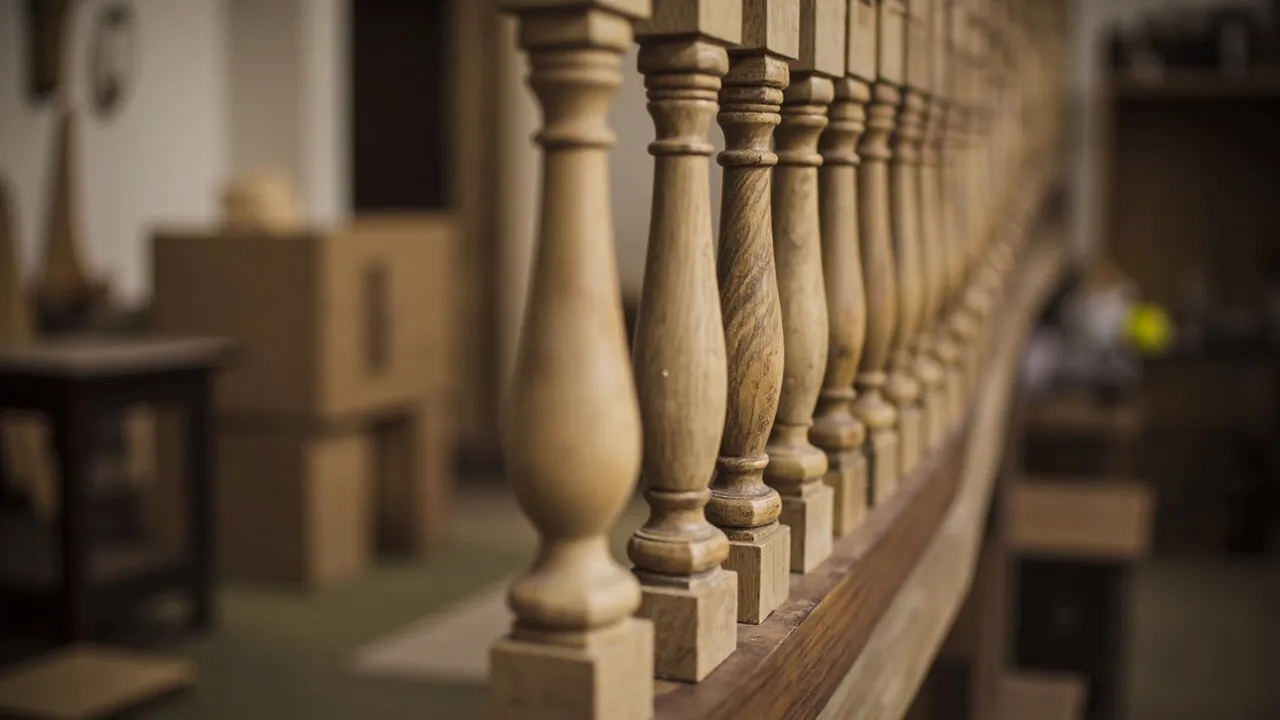
Quick answer: matching replacement spindles to original Victorian staircase
Matching replacement spindles to an original Victorian staircase rests on three checks: the existing profile and length, the timber species, and whether the new pieces drop into the existing sockets in the handrail and baserail.
Send a clear photo and exact dimensions to a specialist turner, and they can hand-cut replicas that fit first time.
Most Victorian staircases in the UK were built from pitch pine, oak, or mahogany, with original spindle sections around 22mm (7/8") square. Edwardian homes often kept the same Victorian proportions but used lighter timbers, so a careful timber check matters even when the house looks Edwardian. If the grain is hard to read, a light sanding on an inconspicuous face usually shows whether the wood is softwood or hardwood.
Modern replacements are commonly turned in oak, ash, hemlock, or sapele because these machine cleanly and take stain to resemble Victorian timbers. Sapele is the closest affordable match for original mahogany. Oak is the safest default for an oak staircase, and ash accepts most traditional finishes with a pale, even colour. Many customers order stair spindles wood in oak or ash to keep a consistent look across the full flight.
Before ordering, count the spindles on each tread and photograph the bare baserail once one is removed. UK Building Regulations require that a 100mm sphere cannot pass through any opening, so each gap between spindles must stay under 99mm. Most Victorian gaps fall between 75mm and 95mm, so like-for-like replacement usually complies without recalculation.
If timber replacement is not the right route, alternatives include wrought iron spindles, glass panels set between baserail and handrail, or slim stainless steel rods. These work on newer newel posts but rarely suit a genuine Victorian handrail, so check the jointing method first. Spindles Woodturning can advise on which route suits your existing newel posts and handrail before you commit.
Send a photograph, the spindle length, and the square-section size to start a quote.
Measuring, Matching Timber, and Meeting Building Regulations
Measuring Profile, Length, and Spacing Without Losing the Original
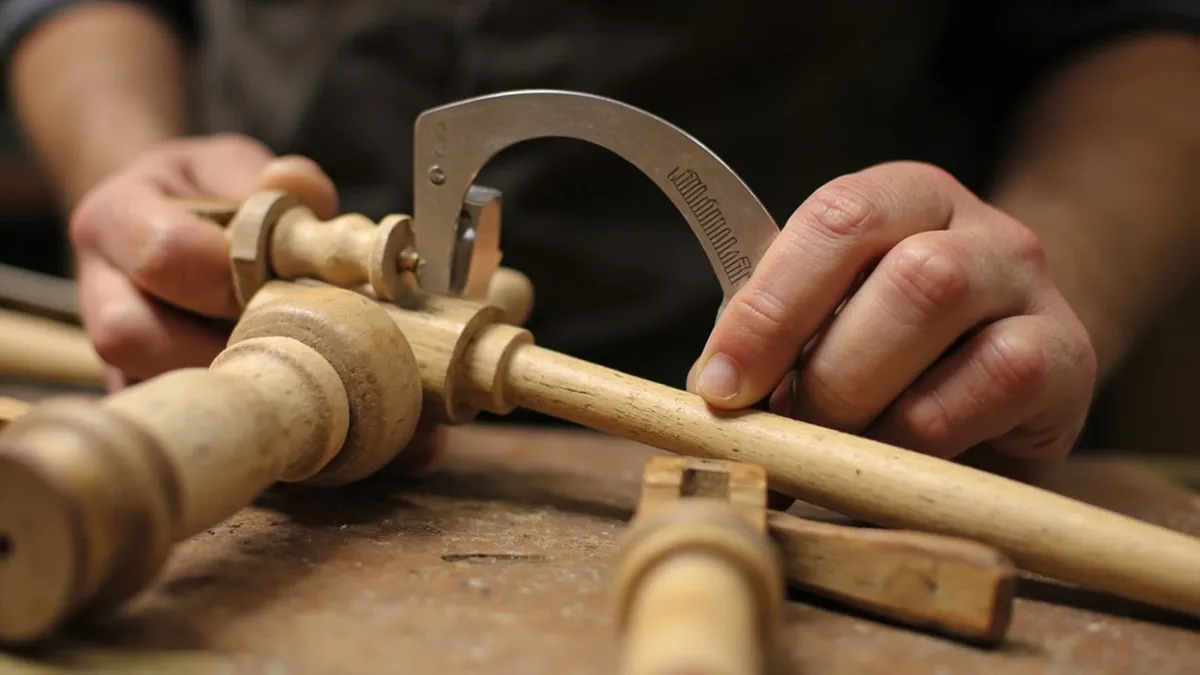
Pull one intact spindle out first, then measure its square section (typically 22mm / 7/8" on a Victorian staircase), its overall length, and the taper of the turning using callipers at the thickest point. Count how many spindles each tread carries, then photograph the bare baserail sockets and the underside of the handrail before any further work. In our Honley workshop, customers who send a short video panning along the bare run, alongside a single removed spindle in the post, get the most accurate copies back. Label every removed spindle by tread position; even an undamaged spare gives the turner a fallback if a replacement splits during fitting. A full spindle staircase quote usually follows within a day of receiving those images.
Timber Species, Finish, and the 100mm Sphere Rule
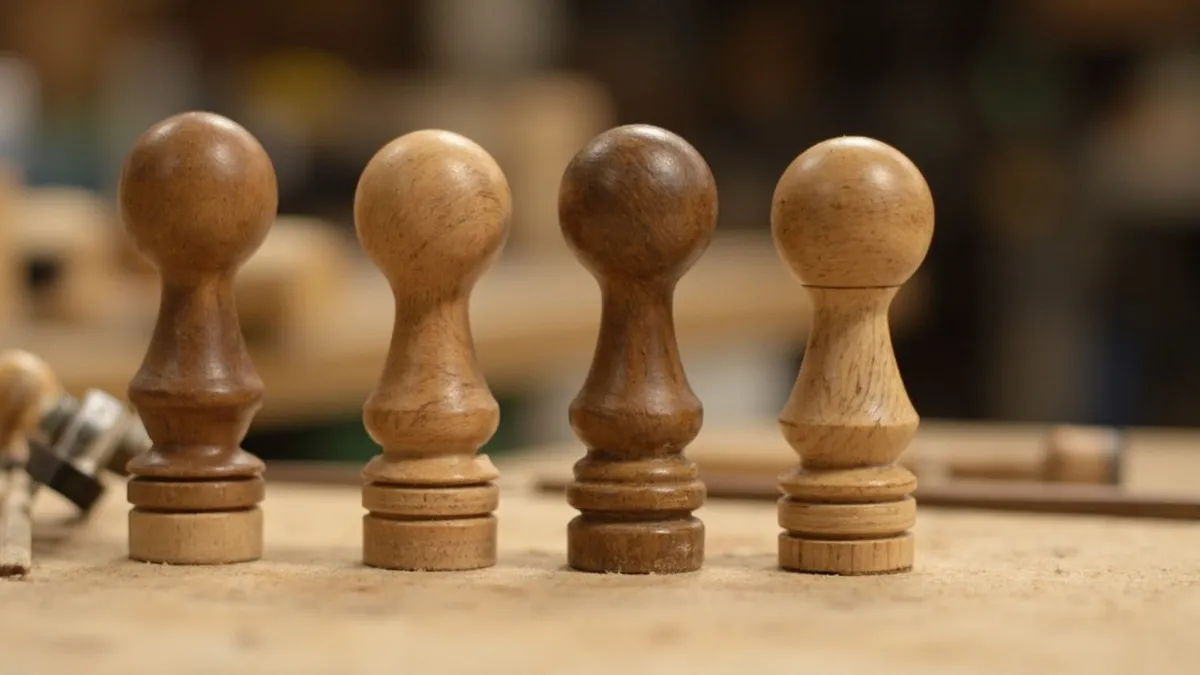
Original Victorian work is usually pitch pine, oak, or sometimes mahogany. The closest modern matches are kiln-dried European oak, ash, hemlock, or sapele, chosen by colour and grain. Send a clean offcut or a high-resolution photo in natural daylight so the species is confirmed before the lathe starts. Stain and varnish are matched by eye against the existing handrail and newel posts, usually in two light coats rather than one heavy one, because new timber drinks finish faster than 100-year-old wood. Whatever profile you copy, the gap between spindles must not let a 100mm sphere pass through under UK Building Regulations Part K, which on a standard 900mm handrail height usually means spacing centres no wider than 99mm.
Send your measurements, photos, and a counted spindle list to info@spindleswoodturning.com or call 01484 666 333 for a fixed quote and lead time.
Send Your Templates to the Workshop and Plan Your Next Step
What to Photograph and Post Before You Order
Send four clear photos of one intact spindle: a face-on view, a side profile, a top-down shot of the square end, and one showing the spindle seated in its baserail socket. Place a 50p coin or a ruler in at least one frame so Daniel can read the section size without travelling to site.
Photograph the bare baserail and handrail run after the old spindles are out, then email the images to the workshop. Daniel reads more from a good side-profile shot than from any written description, so two angles of the turning beat five cropped close-ups.
If you have counted the spindles per tread and noted the newel-to-newel run length in millimetres, include those numbers in your email. Daniel can then quote for the full matching set in one pass rather than working from a partial count. Customers looking for stairs spindles in one consistent batch often find a single templated run saves rework later.
Cost, Lead Time, and When to Talk to the Maker Directly
A single replica spindle in oak usually starts around £18 to £25, with a full flight of 30 to 40 pieces priced as a matched batch. Lead time runs two to four weeks from template approval, longer for ash or sapele because the timber is stick-selected for grain match.
Ring the workshop on 01484 666 333 before placing an order if the staircase is listed, the run is curved, or the baserail sockets are damaged. A five-minute call with the maker often saves a week of back-and-forth, and Daniel can flag whether oak plugs or a stair shoe will be needed at the newel posts before any turning begins. Most staircases spindles orders are confirmed the same day once the measurements are checked.
Sources
- Eight reclaimed timber balusters, matched set – Peoria Architectural Salvage
- Ten painted Victorian balusters, original period stock – Peoria Architectural Salvage
- Restoring Period Charm: A Practical Handbook for Victorian Stair Restoration – UK Stairparts Ltd
- Finding Like-for-Like Spindle Replacements in Britain: A Workshop Handbook
- Best method for refitting Victorian balusters in an existing handrail?
- Made-to-measure staircases in Barnet – AA Home Improvements
- Heritage Components: Newels, Balusters, Handrails & Kitchen Pilasters by Spincraft
- Bespoke Stair Building – Precision Carpentry & Joinery