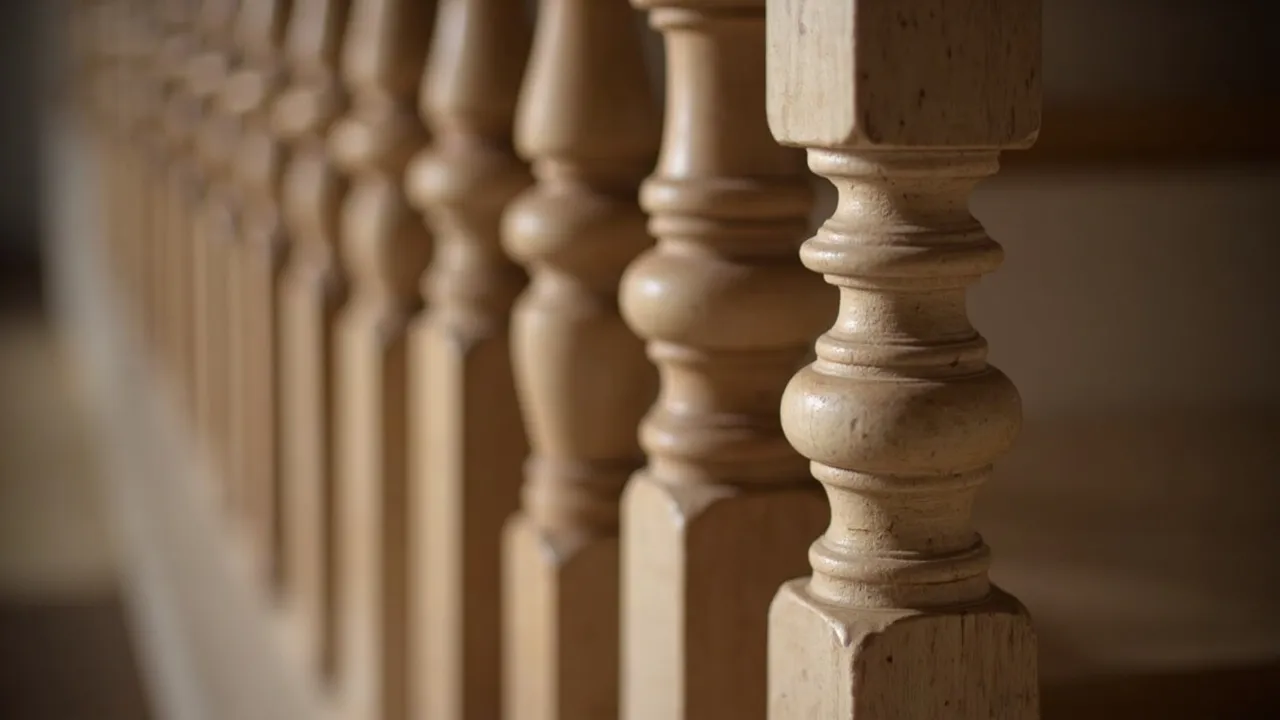
Can you get newel posts turned from an old photo sample? Yes.
A skilled turner such as the team at Spindles Woodturning can reproduce a missing or damaged post from a clear photograph when you supply the shaft diameter, overall height, and timber species, and a small sample is usually turned first for sign-off.
What to send when starting from an old photo
What information should you send?
Send at least three photographs: a full-length side view, a close-up of the turning detail, and a shot of the cap or finial. Add sketches with dimensions, the timber species if you know it, and a note on whether the newel is structural or decorative.
How does a turner match the original?
The turner roughs out the blank, transfers the profile from the photo to callipers, then shapes the piece on the lathe. Where detail is unclear, a small sample is turned first so you can confirm the pattern before the full post is cut.
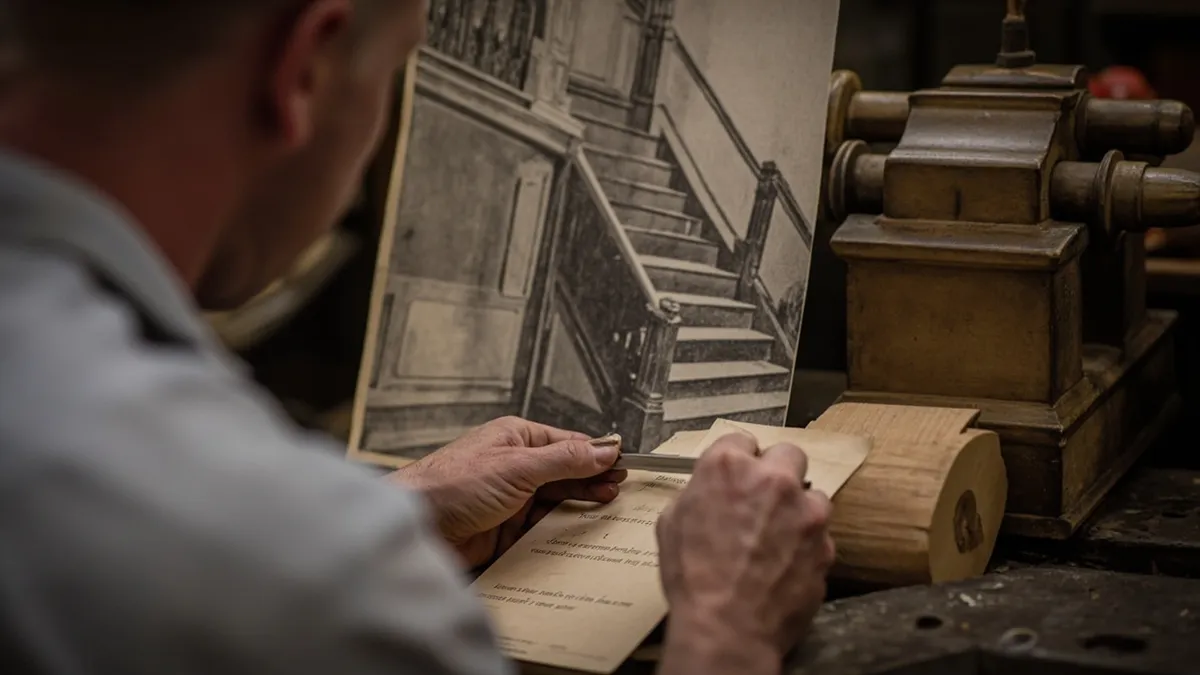
Posts are usually turned in kiln-dried oak, ash, pine, hemlock, or sapele to match surrounding joinery. Lead time for a single bespoke post runs two to four weeks, depending on queue length and timber availability.
Common questions about getting newel posts turned from an old photo sample
How much does it cost to replace a newel post?
A hand-turned replacement newel post typically costs between £180 and £450, with timber, shaft length, and complexity driving the figure. A plain oak column at 90mm sits at the lower end; a sapele Edwardian reproduction with carved cap detail reaches the upper end. Boxing in an existing post with MDF or softwood trim costs less in materials but rarely matches a true turned post, so most period-home owners budget for a proper replacement.
What is a turned newel post?
A turned newel post is a load-bearing stair column shaped on a lathe to produce repeating symmetrical patterns along its shaft. Barley twist, gun barrel, vase, and fluted forms are the most common on period staircases. Because each ring and bead is pared by hand with chisels and gouges against spinning wood, older examples show gentle wobbles of true craftsmanship rather than the slick uniformity of machine output.
Should newel posts be painted or stained?
Stain shows the grain and turning detail; paint conceals both. For Victorian and Edwardian turned posts with barley twist or rope work, a clear Danish oil or light oak stain lets the work read clearly. Paint suits plain box newels or modern stairs where the post is meant to disappear into the wall colour.
Can you cover a newel post?
Yes, you can box in an existing turned newel with MDF or timber boards to mimic a square box newel, using cove or astragal mouldings at the corners. The trade-off is permanent loss of the original profile, and the covering adds 25 to 40mm to each face, which can crowd the handrail line. For listed properties, check consent before cladding an original feature.
Send a photo, sketch, and ruler reference to 01484 666 333 or info@spindleswoodturning.com to start a matched sample.
Costs, finishes, and next steps for your project
Newel post cost, lead times, and the sample approval process
A single hand-turned post in kiln-dried oak or ash typically starts around £180 to £220, rising with shaft size, timber species, and twist count. Posts above 90mm shaft diameter or in heavier hardwoods like sapele push past £280, and a full staircase set (newel, half-newel, and matching spindles) commonly lands between £650 and £950.
Lead times sit at two to four weeks for most turned profiles, because each post is made to order rather than pulled from stock. Once a sample is approved, the remaining posts match it exactly, so the approval step is the slowest part of the job.
The sample approval process works in four steps: you send photos, sketches, or a small offcut; the workshop agrees timber, dimensions, and profile; a single sample post is turned; you give written sign-off before production continues. This keeps Edwardian barley twists, Victorian gun barrels, and fluted shafts faithful to the original.
One trade-off worth flagging: matching an obscure profile from a single photograph can take one or two sample rounds, and each sample adds a week to the lead time. If your staircase has the original newel intact but damaged, sending a small salvaged section with the photo gives a faster, more certain match than a picture alone.
Matching timber species, grain, and period styles
Getting the timber right matters as much as the profile. Oak and ash are the usual choices for Victorian newel posts in UK period homes; pine and hemlock suit earlier softwood staircases; sapele gives a richer reddish tone for Edwardian and Arts and Crafts interiors. Kiln-dried blanks in each species are kept in stock so the new post sits visually flush with the existing turned spindles alongside it.
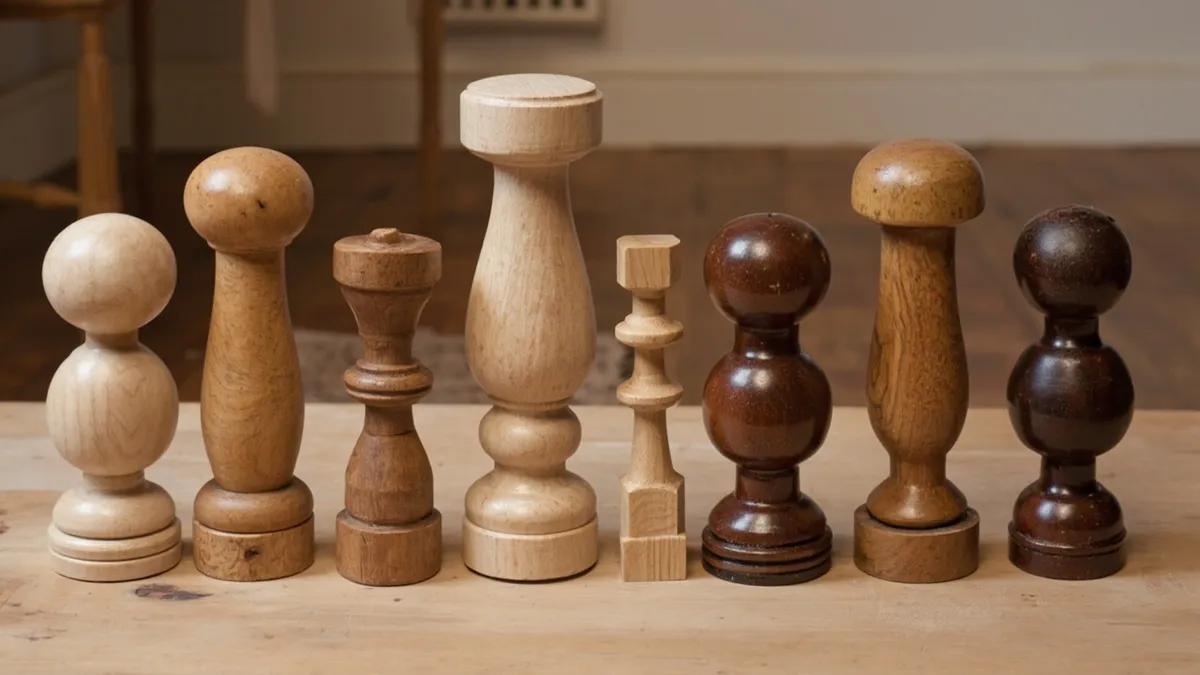
When working from an old photo, the turner looks for three things beyond the silhouette: the grain direction (a vertical split reads very differently to a quarter-sawn face), the colour depth after oiling, and the way shadows fall across the twist. A sample in the chosen timber is the surest way to confirm these before committing to a full set.
Period styles also dictate the twist count and spiral pitch. A standard barley twist on a 90mm shaft runs seven or eight twists over the turned length, while a gun barrel profile uses tighter rings with a flatter central swelling. Photographing a handrail block alongside the newel helps reproduce the cap detail and keeps the whole assembly period-correct.
Working with Spindles Woodturning in Honley, Yorkshire
Spindles Woodturning, run by Daniel Fitzpatrick (known to customers as Scott), operates from a workshop in Honley on the edge of the Pennines and turns newel posts and matching spindles for period staircases across Yorkshire and beyond. Most enquiries start with a photo and a rough sketch, and the workshop's standard practice is to turn a short sample in the chosen timber so the customer can confirm the twist count and cap detail in the hand before a full post is committed. That approval loop is the reason their lead times sit at the two to four-week mark rather than a same-day turnaround.
Frequently asked questions on turned newel posts
How much does it cost to replace a newel post? Replacing one turned newel post in oak or ash usually costs £180 to £280, with hardwoods, oversized shafts, and multi-post orders raising the total.
What is a turned newel post? A turned newel post is the principal column of a staircase, shaped on a lathe into a decorative shaft (barley twist, fluted, gun barrel, or spiral) that secures the handrail at the top and bottom and balances the spindles between.
Should newel posts be painted or stained? Stain suits quality hardwoods such as oak, ash, and sapele because the grain becomes the feature; paint covers lower-grade pine or damaged timber and is common on Edwardian and Victorian restorations.
Can you cover a newel post? Yes, you can box over an existing newel with MDF or timber boards to mimic a square post, but this hides the original turned profile and usually suits modern makeovers rather than heritage work.
Send your photos, dimensions, and timber choice via the contact page or call 01484 666 333 to start a sample on the lathe this week. If you are weighing how to replace spindles on stairs alongside a damaged post, ask the workshop for a combined quote to keep the profile, timber, and finish consistent across the run.
Sources
- Bespoke Timber Newels | Reproduce From a Photograph or Heritage Reference
- Restoring a Victorian House: How Tailor-Made Newel Posts Revive Period Staircases - Select Stair Parts LLC
- Understanding the Timber Newel Post | H.A. Stiles
- Homemade Newel Post Staircase Refresh
- Roundup of Bespoke Newel Posts - Horner Millwork
- Refreshing a Staircase With a DIY Newel Post - The Lived-in Look
- Supplier of Made-to-Order Timber Newel Posts | Arnold Wood Turning
- Yet another ornate newel post and banister arrangement - Facebook