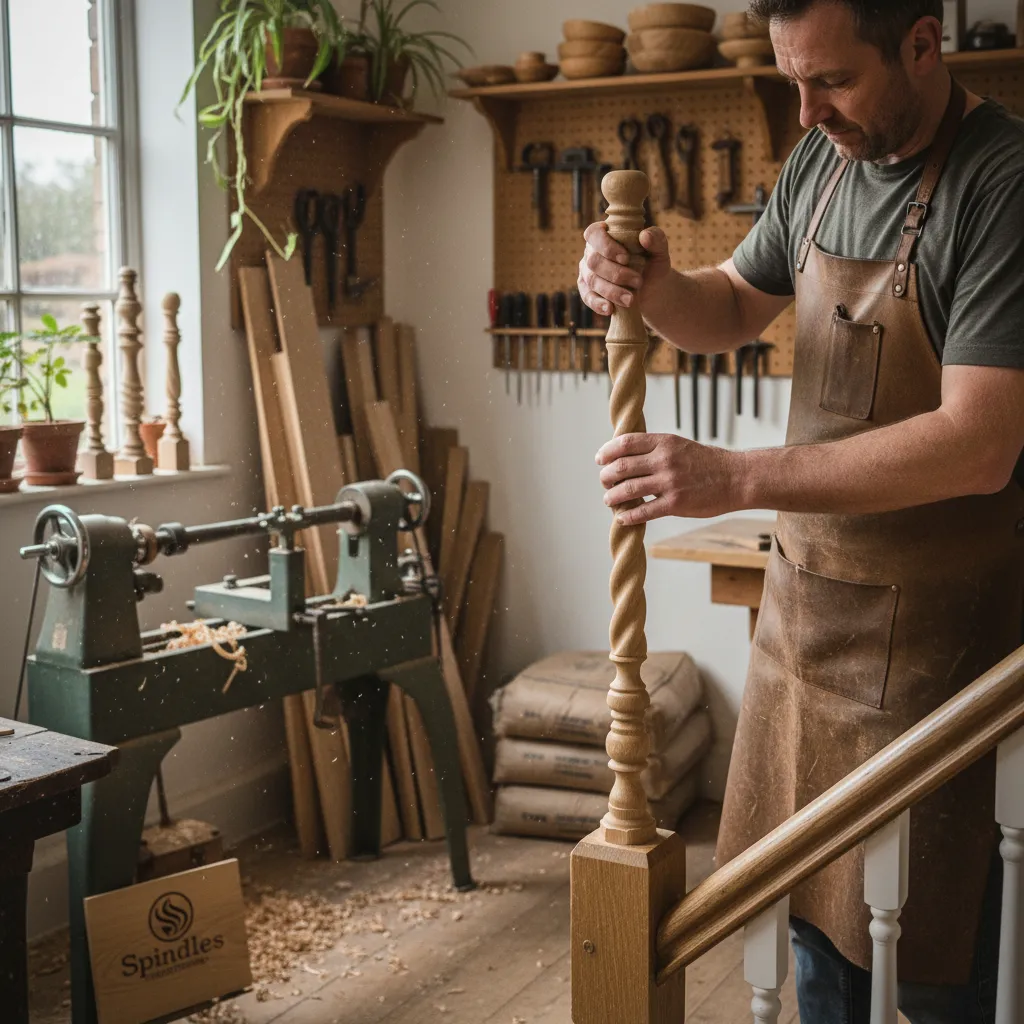
Quick Answer: Replacing Spindles on a Staircase
Replacing spindles on a staircase is a forgiving job for a competent DIYer, and it usually does not mean lifting the handrail. Most projects wrap up in a weekend once the old spindles are out.
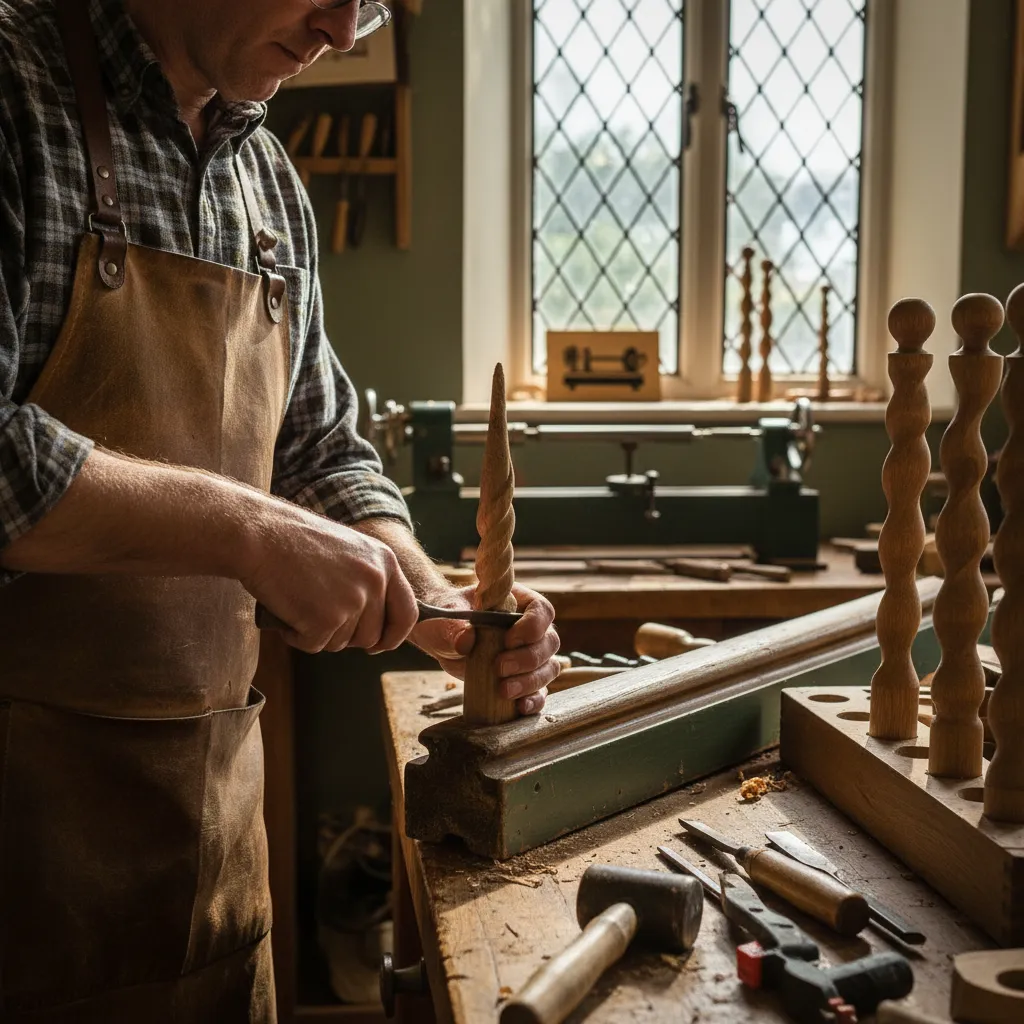
The work splits into two stages: removing each spindle without marking the rail, and fitting a replacement that matches the original length and angle. On a typical UK staircase of 12 to 14 treads, allow four to six hours of hands-on work, plus drying time for any wood glue at the joints.
When You Can Leave the Handrail and Newel Posts in Place
If your spindles slot into a ploughed groove in the handrail and base rail, the rail stays put. A fillet strip pinned or glued alongside each spindle is the usual culprit, and it can be eased out with a chisel and a rubber mallet without marking the timber above it.
Spindles that are end-nailed into the underside of the handrail need more care. A fine saw blade slipped behind the spindle lets you cut the nails, and a Forstner bit drilled into the waste end gives you a clean point to lever against. The handrail stays fixed throughout.
What It Costs
A full set of replacement wooden stair spindles typically runs from £180 to £420 for the timber alone on a standard domestic flight. Hand-turned bespoke spindles sit higher because each one is shaped individually on a lathe rather than cut from a moulding.
Add £40 to £80 for fixings, a small tin of wood glue, and a replacement fillet strip if the original is damaged during removal. Tools most people already own cover the job; the only specialist buy is often a fine-tooth mitre saw blade for clean cuts.
If you would rather not do the removal yourself, a local joiner usually charges £35 to £55 per hour for a single-day spindle swap on a straightforward flight.
Your Spindle Questions Answered
Can You Just Change the Spindles Without Replacing the Whole Banister?
Yes, you can replace spindles without touching the handrail, base rail, or newel posts, provided the existing rails are sound and the spindles are the only worn element. In most UK homes built after 1900, spindles drop into a ploughed groove in the underside of the handrail and sit in a matching groove on the base rail, where a thin fillet strip pins them in place. Release that fillet with a chisel or a stiff scraper, and each spindle slides out individually.
The catch is the finish on older oak or pine rails. Three decades of polish can leave the grooves sticky or slightly out of true, and forcing old spindles back through can bruise the timber. At Spindles Woodturning, a small family workshop in Honley, Yorkshire, Daniel Fitzpatrick has been making hand-turned staircase spindles and newel posts on traditional lathes since 1995. He regularly sees 1920s staircases where one or two damaged pieces are swapped while the rest stay put, and the join lines disappear once a fresh coat of tinted clear oil goes on.
How Much Does It Cost to Replace Spindles on a Staircase in the UK?
Bespoke hand-turned spindles typically cost between £6 and £18 each from a small UK workshop, with a full staircase of 30 to 40 pieces running £180 to £720 for materials alone. Add tool hire, a mitre saw cut, wood glue, and a tin of matching wax, and a competent DIYer can complete the swap for under £800.
Trade-fitted work from a joiner in Yorkshire or the Home Counties usually lands between £900 and £2,200 all-in, depending on access, the number of landings, and whether the newel post is also being replaced. Matching an existing barley twist, fluted, gun barrel, or Victorian profile is where the real cost sits, since each piece is turned individually rather than pulled from a Wickes shelf.
Is It Hard to Replace Spindles, and Can You Do It Without Removing the Banister?
It sits in the intermediate DIY bracket: harder than a fresh coat of paint, easier than replacing treads. In many older UK homes, the spindles fit into a ploughed groove in the handrail and base rail, held by a fillet strip, which lets you prise out each spindle from above without lifting the banister at all. You will need a rubber mallet, a chisel, a mitre saw, and wood glue for reinstall. Banisters only need to come off when you are also swapping the handrail or chasing out spindles that have been glued, dowelled, or face-nailed in place. Cutting through a spindle flush with the rail, then chiselling out the stub, is often quicker than fighting a seized fitting.
Practical Steps, Tools and Trade-Offs
Materials, Styles and Matching Replacement Profiles
Softwood spindles from Wickes or a timber merchant suit budget jobs; kiln-dried oak, ash, or beech turnings last longer in a hallway and match most Victorian and Edwardian work. Take a short intact spindle, a clear photograph against a ruler, and a note of the rail-to-rail length to your turner. Daniel Fitzpatrick in Honley regularly offers bespoke design matching from sketches or photographs, turning each piece on a traditional lathe through his custom wood turning service. Expect 5 to 10 working days for UK-wide delivery once timber is in stock.
If iron or metal balusters are coming out, a Forstner bit cleans up the old dowel socket in the tread before a new timber spindle drops in, giving a tighter, quieter fit. The same applies when replacing stair spindles with wrought iron or with glass panels, where the old wooden stub needs a flat, square socket before the new fitting seats properly. The same workshop also turns furniture parts (table legs, bed posts) and kitchen pilasters, so non-balustrade joinery often gets quoted on the same visit.
Removing Spindles Without Damaging the Rails
Old glue is the usual cause of a ruined rail edge during removal. A few minutes with a heat gun softens animal glue enough to release a fillet strip cleanly, and a damp cloth wiped along the groove stops the softened glue from setting hard again. For PVA or modern adhesive, a sharp chisel worked along the grain lifts the fillet in one piece more often than prying does, and a fresh bead of wood glue beds the new fillet back in.
Always test a hidden spindle first. The middle of a long flight usually gives the fairest indication of how the whole staircase is fixed, and lessons learned there save the visible pieces near the newel posts. The same patience applies when removing stair spindles for painting, since levering too hard chips the surrounding groove and leaves more filling work later on.
Get Bespoke Spindles Made or Talk Through Your Project
What to Send a Workshop and What to Expect
Send a clear photograph of the existing staircase, taken straight-on in good daylight, or a hand-drawn sketch with the key measurements written on it. Daniel needs three numbers: the overall length of each spindle, the width at the thickest part, and the square or rectangular size of each end where it sits in the rail groove. A short note about the wood species and the age of the house helps too, because an 1890s Yorkshire terrace staircase asks for a different approach than a 1930s semi.
Most enquiries get a reply within one working day with a price, a lead time, and a question or two if anything is unclear. For matching work on a heritage staircase, expect a small batch of samples in the post before the full run is turned. Turnaround is usually two to three weeks from approval, and the finished spindles travel UK-wide packed in purpose-made cardboard tubes. The workshop also produces kitchen pilasters, table legs, bed posts, and bowls, so anything outside a straightforward balustrade job is worth mentioning in the first email.
Next Step: Send a Photo or Sketch for a Free Quote
Email a photo, a sketch, or both to info@spindleswoodturning.com with rough measurements and the wood species if known, or ring the workshop on 01484 666 333 to talk it through before sending anything. Every quote is no-obligation, and the same craftsman who answers the phone turns the spindles. Full contact details are on the Spindles Woodturning contact page.
Sources
- A Homeowner's Guide to Swapping Out Stair Spindles
- Refreshing a Staircase on a Budget: Spindle Replacement Walkthrough
- Tackling Baluster Replacement: What a Householder Should Expect
- Fitting New Stair Spindles: A Straightforward Three-Step Method
- Reviving an Old Flight: Spindle Renewal in Short Form
- Three Simple Tricks for Sorting Out Wobbly Spindles at Home
- 2026 Pricing Guide for Staircases, Rails, and Balusters
- Real-World Advice: Swapping Spindles During a Renovation