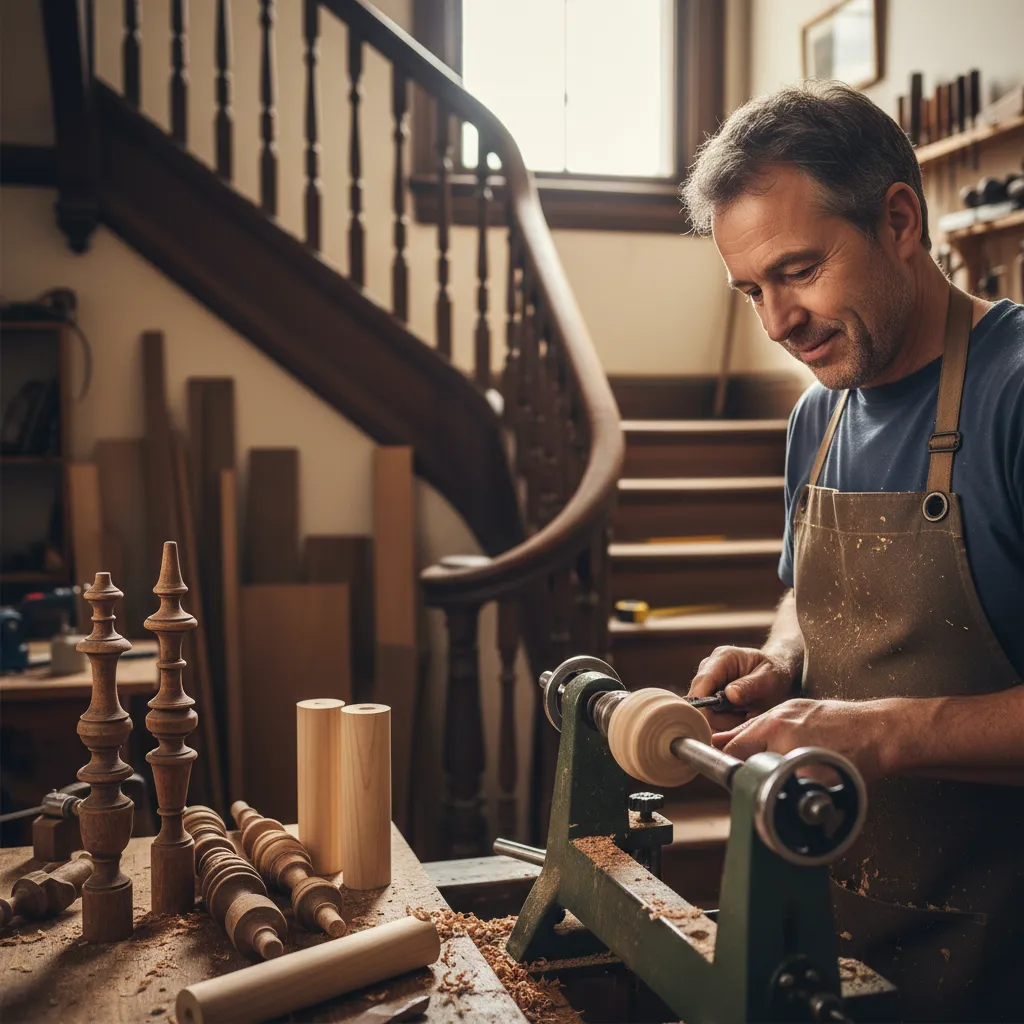
Replacing stair spindles to match a Victorian banister
Replacing stair spindles to match a Victorian banister refreshes the look without disturbing the handrail or newel posts. Match the original profile, timber species, and finish so the new pieces sit cleanly beside the existing banister and staircase.
Quick answer
Replacing stair spindles to match a Victorian banister is a focused job that swaps tired balusters for hand-turned replicas in the same timber. Newel posts, handrail, and base rail stay in place, so the staircase reads original from tread to landing.
Why Victorian spindles often need replacing
A Victorian staircase centres on a heavy starting newel post, shaped treads, and turned balusters with repeating beads, barrels, or barley-twist sections. After sixty or a hundred years of wear, those original spindles often split, shrink, or get hacked out during past refits. The gap between handrail and newel post reads as tired, and the whole stair looks past its best. Replacing just the spindles fixes most of that problem, and at a fraction of the cost of a full refit.
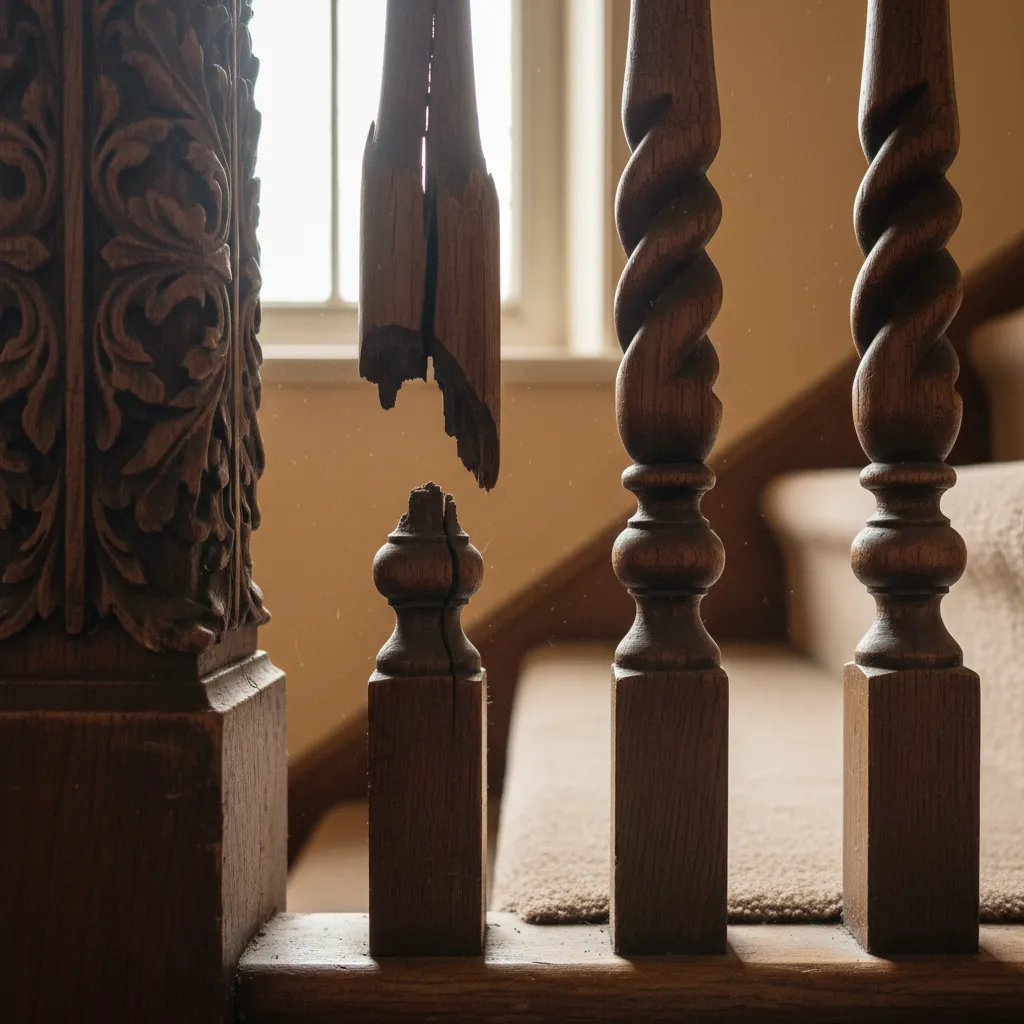
Two trade-offs matter before you start. A genuine match almost always means a bespoke turn rather than an off-the-shelf bar spindle, because the Victorian beading sequence, taper, and square base block are specific to the period. Timber choice controls the outcome too: kiln-dried European oak, ash, or hemlock in the same species as the existing newel ages with the same colour and grain. A cheaper mismatched softwood ghosts through paint and stain within a year. The base rail pegging must also line up with the new spindles, otherwise angled cuts at the top telegraph through a finished flight and spoil the line of the banister.
Keep the 100mm sphere rule in mind: spindles must sit no more than 99mm apart so a small child cannot pass through. If the original Victorian spacing was wider, the newel-to-newel run needs extra spindles, which is reason enough to measure the full run before ordering rather than counting as you go.
Send a photograph of one original spindle, a short section of handrail, and a tape measurement of the run to a specialist turner. A maker working from a single photograph and a sketched section can turn matching spindles in two to four weeks for a typical 13-step flight.
Common questions about replacing stair spindles to match a Victorian banister
Can you just replace spindles on a staircase?
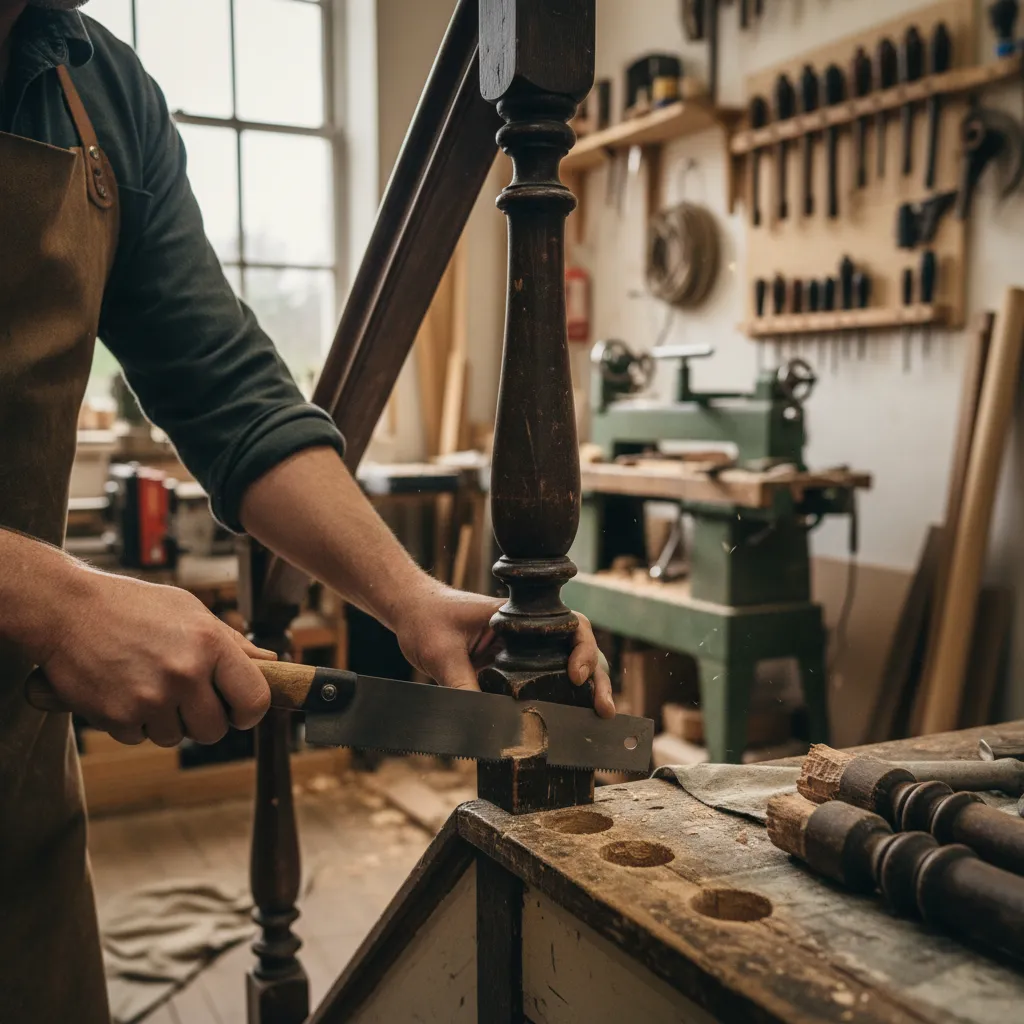
Yes, you can replace spindles without disturbing the handrail or newel posts, provided the existing holes in the base rail and handrail are still sound. Cut the old baluster flush at top and bottom with a fine-tooth saw, then withdraw the shaft. Reusing the original holes saves time and keeps the period look intact. Where the old pegs have crumbled, new stair shoes and oak plugs set in grain-matched timber recover the lost fixing for the replacement spindles.
How to modernize stair spindles?
Refinish the existing balusters before changing their profile, because new stain alone shifts a Victorian staircase noticeably. Painting spindles matte black against an oak handrail is a common update. For a structural change, swap to slim iron balusters; check the 100mm gap rule applies, since iron designs often let more light through and alter the staircase visually. Wrought iron gives a cleaner line but reads as Edwardian or Arts and Crafts rather than Victorian.
What can I use instead of stair spindles?
Glass panels, stainless steel rods, or wrought iron balusters replace wooden spindles when owners want a more open feel. Each option demands different fixings: glass needs channel brackets, iron uses knuckle brackets set into the base rail and handrail. Timber stays the best match for a Victorian home, because the profile can be turned to echo the original turning. Iron balusters suit later-period interiors, while wooden balusters remain the right call when the newel posts and handrail are already Victorian.
How much does it cost to replace spindles and banisters?
Budget roughly £25 to £60 per spindle for matched replacements, with a full staircase of 30 spindles landing between £750 and £1,800 in timber alone. Adding new newel posts and a handrail pushes a complete job into the £2,500 to £5,000 range. Matched profiles cost more, because each baluster is turned individually rather than cut from standard stock.
For a same-pattern match, send a sample or photograph to a turning shop. Daniel Fitzpatrick at Spindles Woodturning has copied Victorian profiles from a single original since 1995.
Next Steps: Commissioning Hand-Turned Replicas for Your Staircase
Send one good photograph of an existing spindle alongside a short ruler shot, and the workshop in Honley, Yorkshire can usually turn a sample within a week. Daniel Fitzpatrick has run that small family workshop since 1995, kiln-drying oak, ash, and hemlock before any turning begins on the traditional lathes.
The trade-off worth knowing: replication costs more per piece than standard stock spindles, yet you keep the original Victorian staircase intact and avoid re-plastering chase walls around a newel post. Clients usually commission 18 to 25 replicas per flight, depending on the landing, with matching newel caps turned to the same profile so the banister reads as one job rather than a repair.
Before ringing, measure the square or round peg size at the top of one old spindle (commonly 16 mm or 22 mm), count how many balusters sit per tread, and note the timber species if the originals are unpainted. Three quick checks save a return trip and keep the matching banister consistent from tread to landing. Wooden balusters commissioned this way typically arrive ready for a light sand, a coat of shellac, and a wax finish on site. New stair shoes, copied from the originals where possible, finish the base of each replacement and hide the joinery cuts at floor level.
Call 01484 666 333 or email info@spindleswoodturning.com with your photos and counts, and the workshop will confirm a price and dispatch date for the full set. Queries can also be sent through the contact page.
Sources
- A Practical Guide to Swapping Out Stair Spindles, Bless'er House
- Refreshing a Dated Timber Staircase and Its Railing, Kylie M Interiors
- Bespoke Newel Posts and Baluster Components for Stair Building, Mouldings One
- Step-by-Step Tutorial: Fitting New Spindles and a Fresh Railing | Wickes
- Choosing Timber Balusters That Complement Your Interior | Arnold Wood Turning
- Our Railing Transformation Achieved Solely Through Baluster Replacement, Chris Loves Julia
- Guides and Reference Pieces for Staircase Design | Designed Stairs
- Tailored Railing Components and Stair Building Supplies | Builders FirstSource